Introduction
Paracetamol is one of the most commonly used medicines for everyday pain and fever. Many people keep it at home because it is easy to access, simple to take, and useful for common problems such as headaches, body aches, toothache, sore throat, and fever.
Even though paracetamol is widely used, it should still be taken carefully. Like every medicine, it works best when used in the correct dose and at the right time. Taking too much, taking it too often, or mixing it with other medicines that also contain paracetamol can increase the risk of serious harm.
This guide explains what paracetamol is used for, how it is usually taken, what safety rules to remember, and when it is better to speak with a doctor or pharmacist before using it.
What Is Paracetamol?
Paracetamol is a medicine used to relieve pain and reduce high temperature. In some countries, it is also known as acetaminophen. It belongs to a group of medicines called pain relievers and fever reducers.
People often use paracetamol for mild to moderate pain. It does not treat the root cause of an illness, but it can help control symptoms while the body recovers or while a person follows medical treatment advised by a healthcare professional.
Paracetamol is available in different forms, including:
- Tablets
- Capsules
- Liquid medicine
- Soluble tablets
- Chewable tablets
- Suppositories
- Combination cold and flu medicines
Because it is found in many products, it is important to read labels carefully before taking more than one medicine at the same time.
Common Uses of Paracetamol
Paracetamol is commonly used for short-term relief of pain and fever. It may help with:
- Headache
- Toothache
- Muscle pain
- Back pain
- Period pain
- Sore throat
- Cold and flu symptoms
- Fever
- General body aches
It is often chosen when a person needs pain relief but cannot take certain anti-inflammatory medicines. However, the best choice of medicine depends on the person’s age, health condition, other medicines, and the reason for pain or fever.
How Paracetamol Works
Paracetamol helps reduce pain signals and can also lower a high temperature. It works differently from anti-inflammatory medicines such as ibuprofen. Paracetamol is not mainly used to reduce swelling or inflammation, but it can still be useful for pain and fever.
For many common conditions, paracetamol may make a person feel more comfortable. However, it does not cure infections, remove the cause of pain, or replace professional medical care when symptoms are serious or long-lasting.
General Dosage Guidance
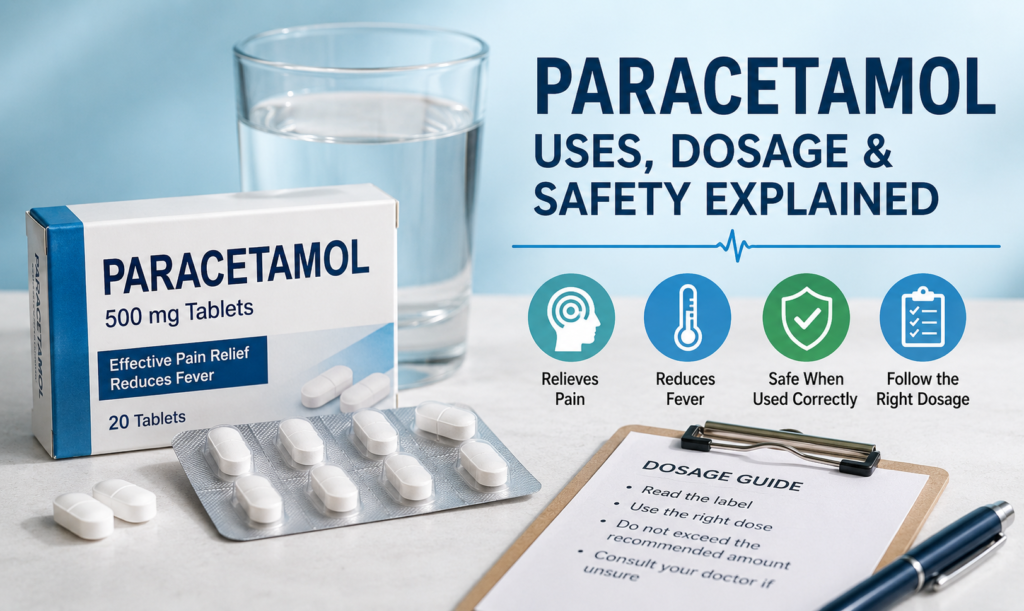
The correct dose of paracetamol depends on the person’s age, weight, product strength, and medical condition. Always follow the instructions on the medicine packet, bottle, or leaflet.
For many standard adult paracetamol tablets, the strength is often 500 mg per tablet. General adult guidance commonly says one dose may be one or two 500 mg tablets, with at least four hours between doses. Many adult products also warn not to take more than the maximum daily amount listed on the packet.
Important dosage safety rules:
- Do not take more than the label allows.
- Leave the recommended time gap between doses.
- Do not take extra doses because pain has not improved quickly.
- Do not take two paracetamol-containing products together.
- Ask a pharmacist if you are unsure about the correct dose.
- Do not use adult products for children unless a healthcare professional says it is appropriate.
Paracetamol liquid products can have different strengths, so the dose must be measured carefully. Use the measuring spoon, cup, or syringe provided with the medicine. A kitchen spoon should not be used because it may give the wrong amount.
Paracetamol for Children
Children need special care when taking paracetamol. Their dose is usually based on age, weight, and the exact product strength. A child should not be given an adult dose.
Parents and caregivers should always check:
- The child’s age
- The child’s weight, if required
- The strength of the medicine
- The correct amount per dose
- The correct time gap between doses
- The maximum number of doses in 24 hours
If a child is very young, has a serious illness, has symptoms that are getting worse, or if the caregiver is unsure about the dose, it is safer to speak with a doctor or pharmacist first.
Important Safety Rules
Paracetamol is usually safe when taken correctly, but mistakes can happen easily because it is included in many cold, flu, and pain-relief products. A person may think they are taking two different medicines, but both may contain paracetamol.
Before taking paracetamol, check the active ingredients on every medicine label. Look for names such as:
- Paracetamol
- Acetaminophen
- APAP
This is especially important when using cough, cold, flu, sinus, or combination pain medicines.
The safest approach is simple: do not take more than one paracetamol-containing medicine at the same time unless a doctor or pharmacist confirms it is safe.
Who Should Speak With a Doctor or Pharmacist First?
Some people should get professional advice before taking paracetamol. This includes people who:
- Have liver disease
- Have kidney disease
- Drink alcohol heavily or regularly
- Are underweight or malnourished
- Are taking blood-thinning medicine such as warfarin
- Are taking other regular prescription medicines
- Are pregnant or breastfeeding
- Have had an allergic reaction to paracetamol before
- Need pain relief for more than a few days
A doctor or pharmacist can help confirm whether paracetamol is suitable and whether the dose needs adjustment.
Possible Side Effects
Most people do not experience side effects when paracetamol is taken correctly. However, side effects can happen.
Possible warning signs include:
- Skin rash
- Itching
- Swelling of the face, lips, tongue, or throat
- Trouble breathing
- Severe dizziness
- Yellowing of the skin or eyes
- Dark urine
- Unusual tiredness
- Pain in the upper stomach
- Unusual bruising or bleeding
An allergic reaction or signs of liver problems should be treated seriously. If any severe symptoms appear, medical help should be requested immediately.
What Happens If You Take Too Much?
Taking too much paracetamol can be dangerous. One of the biggest risks is liver damage. This can happen even if the person feels normal at first.
A person should seek urgent medical advice if they:
- Took more than the recommended dose
- Accidentally took two paracetamol-containing medicines together
- Took doses too close together
- Are unsure how much they took
- Gave a child too much by mistake
Do not wait for symptoms to appear. In some overdose cases, early treatment is very important. If possible, keep the medicine packet or bottle and show it to the healthcare provider.
Can Paracetamol Be Taken With Other Medicines?
Paracetamol can be used with some medicines, but it may not be suitable with others. The biggest concern is accidentally taking more paracetamol from another product.
Be careful with:
- Cold and flu medicines
- Cough syrups
- Sinus medicines
- Combination painkillers
- Prescription medicines that include paracetamol
- Blood-thinning medicines
- Medicines for nausea or sickness
- Some antibiotics and specialist medicines
If you take regular medication, ask a pharmacist before using paracetamol. This is especially important if you take medicines every day or have a long-term health condition.
Paracetamol and Alcohol
People who drink heavily or have alcohol-related health problems should speak with a doctor or pharmacist before taking paracetamol. Alcohol can increase pressure on the liver, and paracetamol is also processed through the liver.
Occasional alcohol use may not be a problem for every adult, but people with heavy drinking habits, liver disease, or other risk factors should be extra careful.
Safe Storage at Home
Paracetamol should be stored safely, especially in homes with children. Keep it:
- In its original packaging
- Away from heat and moisture
- Out of sight and reach of children
- Away from pets
- With the label and leaflet intact
- Separate from expired or unused medicines
Do not keep loose tablets in bags, drawers, or unmarked containers. If the expiry date has passed, ask a pharmacist about safe disposal.
When to See a Doctor
Paracetamol may help with short-term symptoms, but it should not be used to hide serious or ongoing problems.
Speak with a doctor if:
- Pain does not improve
- Fever lasts more than a few days
- Symptoms keep returning
- Pain is severe or unusual
- You have chest pain, breathing difficulty, confusion, or severe weakness
- A child’s symptoms are worsening
- You need paracetamol regularly for a long period
Long-lasting pain or fever may need proper diagnosis and treatment.
Quick Safety Checklist
Before taking paracetamol, ask yourself:
- Have I read the label?
- Am I taking the correct dose?
- Has enough time passed since my last dose?
- Am I already taking another medicine with paracetamol?
- Do I have liver disease, kidney disease, or heavy alcohol use?
- Is this medicine suitable for my age and health condition?
- Do I need advice from a pharmacist or doctor?
A few simple checks can prevent serious mistakes.
Final Thoughts
Paracetamol is a useful everyday medicine for pain and fever, but it must be used responsibly. The main safety rule is to follow the label and avoid taking more than the recommended amount.
Because paracetamol is included in many medicines, always check product ingredients before combining treatments. If you are unsure about the dose, have a medical condition, take other medicines, or are giving paracetamol to a child, speak with a pharmacist or doctor first.
Used correctly, paracetamol can be a helpful part of home medicine care. Used incorrectly, it can cause serious harm. Safe use starts with reading the label, measuring carefully, and asking for help when needed.
Medical Disclaimer:
This article is for general information only and should not replace medical advice. Always follow the instructions on your medicine label and speak with a qualified healthcare professional for personal guidance.