
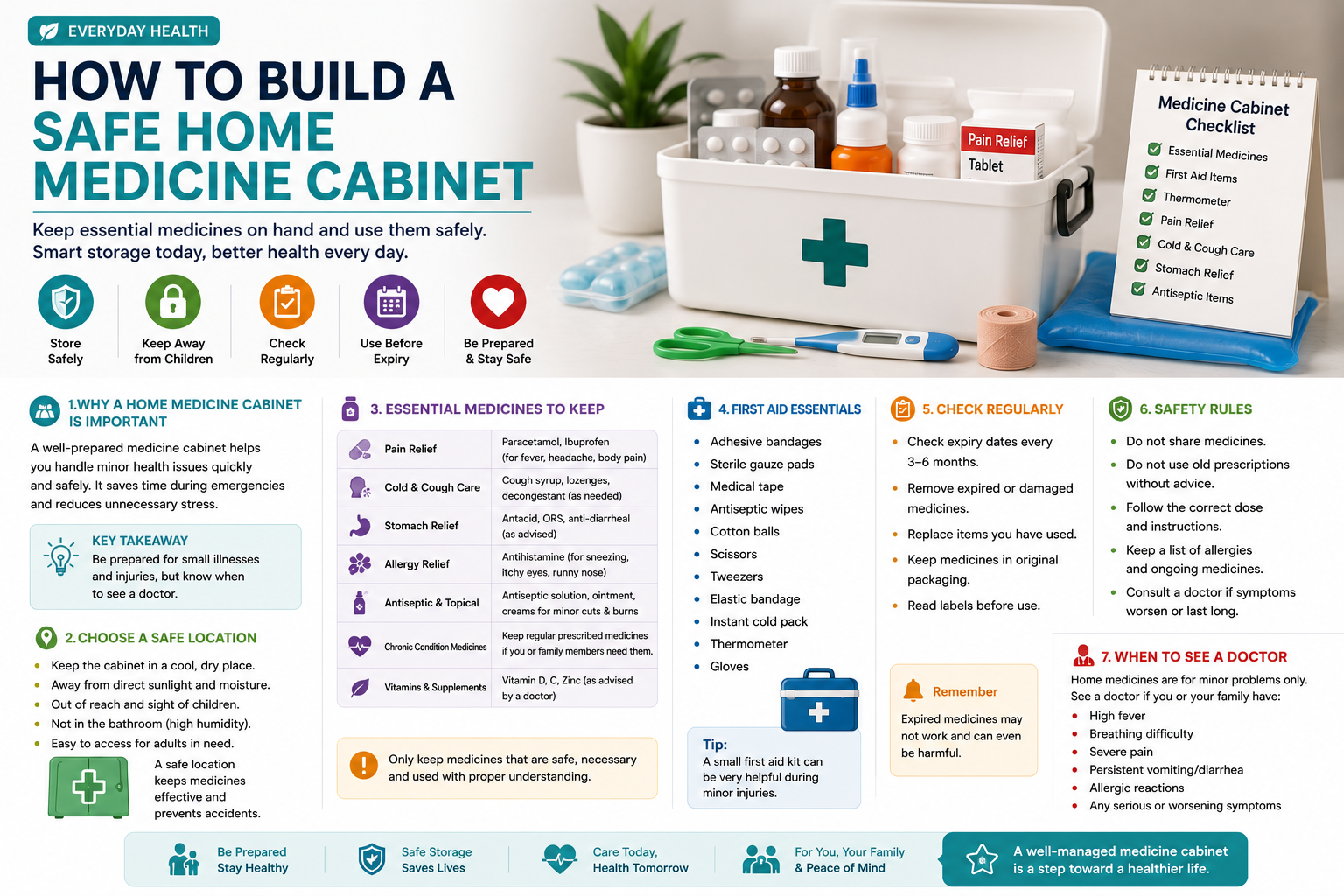
Introduction
A well-organized home medicine cabinet can be very helpful for everyday health needs. It allows you to handle minor problems such as headache, fever, small cuts, mild stomach discomfort, allergies, and basic first-aid situations more quickly.
However, a medicine cabinet should not become a random collection of old tablets, expired syrups, opened creams, and unknown medicines. Keeping medicines without checking them can create safety risks, especially in homes with children, elderly family members, or people taking regular prescriptions.
A safe home medicine cabinet is not about keeping many medicines. It is about keeping the right items, storing them correctly, checking expiry dates, and knowing when home care is not enough.
Why a Home Medicine Cabinet Is Important
A medicine cabinet helps families stay prepared for common minor health needs. When organized properly, it can save time and reduce panic during small health issues.
A safe medicine cabinet can help with:
- Minor pain
- Fever
- Small cuts
- Mild allergies
- Minor burns
- Stomach discomfort
- Cold and cough symptoms
- Basic wound care
- Checking temperature
- Keeping regular medicines organized
But home medicines are only for appropriate minor problems. Serious symptoms, worsening illness, breathing problems, severe pain, allergic reactions, or long-lasting symptoms should be checked by a healthcare professional.
Choose a Safe Storage Location
The first step is choosing where to keep your medicines. Many people store medicines in the bathroom, but this is often not ideal because bathrooms can become warm and humid. Heat and moisture may affect medicine quality.
A better storage location is usually:
- Cool
- Dry
- Away from direct sunlight
- Away from moisture
- Out of sight of children
- Out of reach of children
- Easy for adults to access
- Away from food if possible
- Away from cleaning chemicals
Good options may include a high closet shelf, a locked box, a storage drawer, or a dedicated medicine container in a dry area.
Keep Medicines Away From Children
Children may mistake medicines for sweets, drinks, or gummies. Even vitamins and supplements can be dangerous if taken in large amounts. This is why medicines should be stored safely after every use.
Important child safety rules:
- Keep all medicines out of sight.
- Keep all medicines out of reach.
- Use child-resistant caps when available.
- Close caps tightly after every use.
- Do not leave medicine on tables or counters.
- Do not keep medicines in handbags where children can reach them.
- Do not call medicine “candy.”
- Teach children that medicine should only be given by a trusted adult.
CDC specifically reminds families that prescription medicines, over-the-counter medicines, vitamins, melatonin, and supplements should all be kept out of children’s sight and reach.
Keep Medicines in Original Packaging
Medicines should stay in their original packaging whenever possible. The original box, bottle, or blister pack contains important information that helps prevent mistakes.
Original packaging helps you check:
- Medicine name
- Active ingredient
- Strength
- Dose instructions
- Warnings
- Expiry date
- Batch number
- Storage instructions
- Manufacturer information
Loose tablets in unmarked containers can be dangerous because you may forget what they are, how strong they are, or who they were prescribed for.
Essential Medicines to Keep at Home
The exact medicines you keep at home depend on your family’s needs, age group, health conditions, allergies, and doctor’s advice. A simple home medicine cabinet may include a few basic categories.
Common medicine categories may include:
- Pain and fever relief
- Allergy relief
- Cold and cough care
- Stomach relief
- Oral rehydration salts
- Antiseptic items
- Skin irritation treatment
- Regular prescribed medicines
- Vitamins or supplements only if advised
- Thermometer and basic health tools
Do not keep unnecessary medicines just because they were once prescribed. Medicines should be safe, current, labeled, and clearly understood.
Pain and Fever Relief
Pain and fever medicines are common items in a home medicine cabinet. They may help with headache, body aches, toothache, mild fever, and minor pain.
Before using pain or fever medicine, check:
- Active ingredient
- Correct dose
- Age suitability
- Time gap between doses
- Maximum daily dose
- Allergy warnings
- Health condition warnings
- Whether another medicine contains the same ingredient
Never take more than the recommended amount. If fever or pain is severe, unusual, or long-lasting, speak with a healthcare professional.
Cold and Cough Care
Cold and cough medicines may help relieve symptoms, but they do not cure viral infections. Many combination cold and flu products contain multiple active ingredients, so they must be used carefully.
Be careful with:
- Duplicate ingredients
- Drowsiness warnings
- Blood pressure warnings
- Child age restrictions
- Alcohol warnings
- Use with other medicines
- Maximum dose instructions
A pharmacist can help choose the safest product for your symptoms.
Allergy Relief Items
Allergy medicines may help with sneezing, runny nose, itchy eyes, hives, or mild skin itching. Some allergy medicines can cause drowsiness, so check the label before driving or working.
Allergy cabinet items may include:
- Antihistamine tablets or liquid
- Allergy eye drops
- Saline nasal spray
- Skin soothing lotion
- Prescribed emergency allergy medicine, if needed
People with severe allergies should follow their doctor’s allergy action plan and keep emergency medicine available if prescribed.
Stomach Relief Items
Mild stomach issues can happen from indigestion, acidity, certain foods, or minor digestive upset. A home medicine cabinet may include basic stomach relief items, but they should be used carefully.
Possible items include:
- Antacid
- Oral rehydration salts
- Anti-diarrheal medicine, if suitable
- Medicine for constipation, if advised
- Electrolyte solution
- Thermometer for illness monitoring
Seek medical advice if stomach symptoms are severe, repeated, bloody, linked with dehydration, or lasting more than expected.
First-Aid Essentials
A medicine cabinet should include first-aid supplies, not just medicines. These items help manage small cuts, scrapes, burns, and minor injuries.
Useful first-aid items include:
- Adhesive bandages
- Sterile gauze pads
- Medical tape
- Antiseptic wipes
- Antiseptic solution
- Cotton balls
- Tweezers
- Small scissors
- Elastic bandage
- Disposable gloves
- Instant cold pack
- Burn dressing or gel, if suitable
- Digital thermometer
A small first-aid kit can be very useful during minor injuries at home, work, school, or travel.
Regular Prescription Medicines
If someone in the family takes regular prescription medicine, keep it organized and separate from general household medicines.
Good habits include:
- Store each person’s medicine clearly.
- Keep prescription labels attached.
- Follow the exact dose.
- Refill before running out.
- Do not mix different medicines in one bottle.
- Do not share prescription medicines.
- Keep a list of current medicines.
- Track allergies and side effects.
- Ask before adding OTC medicines.
Prescription medicines are given for a specific person and condition. They should not be used by another family member.
What Not to Keep
A safe cabinet also means removing items that should not be there.
Avoid keeping:
- Expired medicines
- Medicines without labels
- Loose tablets
- Old prescriptions
- Medicines prescribed for someone else
- Damaged bottles
- Discolored tablets
- Leaking syrups
- Creams with changed smell or texture
- Duplicate medicines you do not understand
- Medicines stored outside recommended conditions
FDA warns that expired medicines may be less effective or risky because of chemical changes or bacterial growth, and recommends proper disposal rather than using them.
Check Expiry Dates Regularly
A medicine cabinet should be checked every few months. This helps remove expired items and replace supplies before you need them.
During a cabinet check, look for:
- Expiry dates
- Broken seals
- Damaged packaging
- Unclear labels
- Changed color
- Bad smell
- Leaking bottles
- Finished supplies
- Missing first-aid items
- Medicines no longer needed
A simple check every three to six months can keep your medicine cabinet safer and more useful.
Dispose of Medicines Safely
Do not simply keep old medicines “just in case.” Unused or expired medicines can be taken accidentally, misused, or confused with current treatment.
FDA says the preferred way to dispose of expired, unwanted, or unused medicine is through a drug take-back location or pre-paid drug mail-back envelope when available. If take-back is not available, FDA provides medicine-specific instructions, including checking whether a medicine is on the flush list or following proper household trash disposal steps for medicines not on that list.
When in doubt, ask a pharmacist how to safely dispose of medicine in your area.
Keep a Medicine List
Every home should have an updated medicine list, especially if someone takes regular treatment.
Your medicine list should include:
- Medicine name
- Dose
- Time of use
- Reason for use
- Doctor’s name
- Pharmacy name
- Allergies
- Side effects
- Emergency contact
- Supplements
- Over-the-counter medicines
Keep one copy with the medicine cabinet and another on your phone. This list can help doctors, pharmacists, and family members during emergencies.
Store Emergency Information
Along with medicines, keep important health information available for family members.
Useful emergency information includes:
- Emergency contact numbers
- Doctor’s contact
- Pharmacy contact
- Allergies
- Current medicines
- Chronic conditions
- Blood type, if known
- Insurance or health card details
- Poison center or local emergency number
- Instructions for prescribed emergency medicines
This can save valuable time during a health emergency.
Travel Medicine Mini-Kit
A small travel medicine kit can be helpful, especially for families. It should include only safe and necessary items.
A travel kit may include:
- Regular prescription medicines
- Pain or fever medicine
- Allergy medicine
- Oral rehydration salts
- Bandages
- Antiseptic wipes
- Thermometer
- Motion sickness medicine, if suitable
- Doctor’s note for certain medicines, if needed
- Copies of prescriptions
Keep medicines in original packaging while traveling. Some medicines may need special storage or travel documents.
Medicine Cabinet for Children
If children live in the home, the medicine cabinet must be planned carefully. Children should not have direct access to any medicine, even vitamins or gummies.
For children, keep:
- Age-appropriate fever medicine
- Measuring syringe or spoon
- Child-safe oral rehydration solution
- Thermometer
- Pediatrician contact details
- Allergy information
- Prescribed medicines only if needed
Do not guess children’s doses. Children’s medicine dose may depend on age, weight, and product strength.
Medicine Cabinet for Older Adults
Older adults may take several medicines. This increases the risk of confusion, missed doses, duplicate therapy, and drug interactions.
Helpful organization tips include:
- Keep medicines clearly labeled.
- Use a medicine schedule.
- Review medicines regularly with a doctor or pharmacist.
- Keep a list of allergies.
- Avoid mixing medicines.
- Watch for side effects.
- Use pill organizers only if filled correctly.
- Remove discontinued medicines.
Medication review is especially important for older adults who see more than one doctor.
Safety Rules for Everyone
A safe medicine cabinet should follow simple rules.
Important safety rules include:
- Read the label before every use.
- Use the correct dose.
- Do not share medicines.
- Do not use old prescriptions.
- Do not mix medicines without advice.
- Keep medicines away from children.
- Keep medicines in original packaging.
- Check expiry dates.
- Dispose of unused medicines safely.
- Ask a pharmacist when unsure.
These small rules can prevent major mistakes.
When Home Medicine Is Not Enough
Home medicines are useful for minor problems, but they are not a replacement for medical care.
Seek medical advice if you or a family member has:
- High fever
- Breathing difficulty
- Chest pain
- Severe headache
- Severe abdominal pain
- Persistent vomiting
- Severe diarrhea
- Blood in stool or vomit
- Signs of dehydration
- Allergic reaction
- Confusion
- Fainting
- Worsening symptoms
- Symptoms lasting longer than expected
- Serious injury
- Medicine overdose
Do not delay urgent care because you have medicines at home.
Quick Home Medicine Cabinet Checklist
Use this checklist to organize your cabinet:
- Medicines are stored in a cool, dry place.
- Medicines are out of sight and reach of children.
- Prescription medicines are clearly labeled.
- Expired medicines are removed.
- First-aid supplies are complete.
- Thermometer is working.
- Doses and instructions are readable.
- Child measuring device is available.
- Emergency contacts are easy to find.
- Medicine list is updated.
- Supplements are also stored safely.
- Unused medicines are disposed of properly.
A safe cabinet is simple, clean, organized, and regularly checked.
Final Thoughts
A safe home medicine cabinet helps you manage minor health problems with confidence. It should include only necessary medicines, basic first-aid supplies, a working thermometer, clear labels, and updated emergency information.
The most important safety steps are proper storage, regular expiry checks, keeping medicines away from children, avoiding old prescriptions, and disposing of unused medicines correctly.
Your home medicine cabinet should support good health, not create hidden risks. Keep it organized, keep it current, and ask a pharmacist or doctor whenever you are unsure.
Medical Disclaimer:
This article is for general information only and should not replace professional medical advice. Always read medicine labels and speak with a qualified healthcare professional before starting, stopping, combining, or changing any medicine.
