Introduction
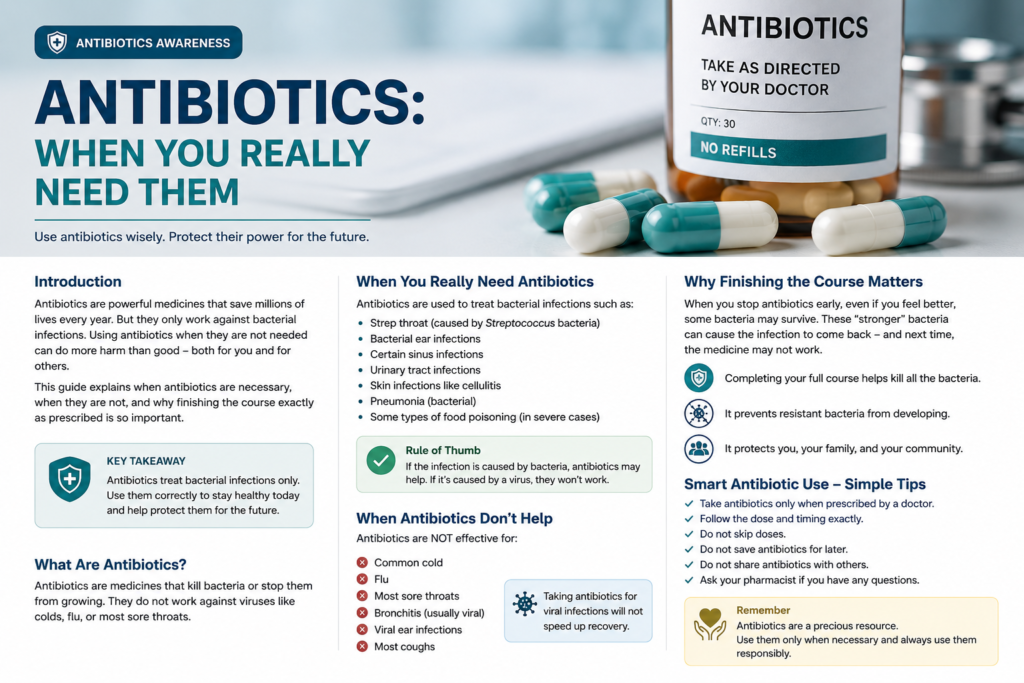
Antibiotics are powerful medicines that help treat infections caused by bacteria. They have saved many lives and remain one of the most important tools in modern healthcare. When used correctly, antibiotics can stop harmful bacteria from growing, reduce serious infection risks, and help the body recover.
However, antibiotics are not needed for every illness. Many common infections, especially colds, flu, and most sore throats, are caused by viruses. Antibiotics do not work against viruses. Taking antibiotics when they are not needed can cause side effects and may make bacteria harder to treat in the future.
This article explains when antibiotics are useful, when they are not helpful, why finishing the prescribed course matters, and how to use antibiotics safely.
What Are Antibiotics?
Antibiotics are medicines used to treat bacterial infections. They work by either killing bacteria or stopping bacteria from multiplying. Once the bacteria are controlled, the immune system can usually clear the infection more effectively.
Different antibiotics work against different types of bacteria. This is why doctors choose antibiotics based on the infection type, symptoms, test results, patient history, allergies, and other health factors.
Antibiotics may come in different forms, including:
- Tablets
- Capsules
- Liquid medicine
- Creams or ointments
- Eye or ear drops
- Injections
- Intravenous medicine in hospital settings
The form and dose depend on the infection and the patient’s condition.
When Antibiotics Are Usually Needed
Antibiotics may be needed when an infection is caused by bacteria and the body needs help fighting it. Some bacterial infections can become serious if not treated properly.
A healthcare professional may prescribe antibiotics for conditions such as:
- Bacterial pneumonia
- Some urinary tract infections
- Certain skin infections
- Some ear infections
- Strep throat confirmed or strongly suspected by a doctor
- Some dental infections
- Certain wound infections
- Severe bacterial sinus infections
- Specific sexually transmitted bacterial infections
In some situations, antibiotics may also be given before surgery or after certain wounds if there is a high risk of infection. This decision should always be made by a qualified healthcare professional.
When Antibiotics Do Not Help
Antibiotics do not work against viruses. This is one of the most important points to understand.
Antibiotics usually do not help with:
- Common cold
- Flu
- Most coughs
- Most sore throats
- Viral bronchitis
- Many sinus infections
- Many ear infections
- COVID-like viral infections
In these cases, antibiotics will not speed up recovery. The best treatment may include rest, fluids, fever control, pain relief, and time. A pharmacist or doctor can suggest safe symptom relief based on your age and health condition.
Why Doctors Do Not Always Prescribe Antibiotics
Some people feel disappointed when a doctor does not prescribe antibiotics, especially when they feel very sick. But avoiding unnecessary antibiotics is often the safer decision.
Doctors may avoid antibiotics when:
- The infection is likely viral
- Symptoms are mild and may improve naturally
- The risks of antibiotics are greater than the benefits
- Test results do not suggest bacterial infection
- The infection needs observation before treatment
- Another treatment is more suitable
Not prescribing antibiotics does not mean the illness is being ignored. It means the doctor is choosing the treatment that is most appropriate for the likely cause.
The Problem With Taking Antibiotics Unnecessarily
Using antibiotics when they are not needed can create several problems. The medicine may not help the illness, but it can still affect the body.
Possible problems include:
- Diarrhea
- Nausea
- Stomach upset
- Skin rash
- Yeast infections
- Allergic reactions
- Disturbance of healthy bacteria in the body
- Increased risk of antibiotic resistance
Antibiotic resistance happens when bacteria change and become harder to kill with the medicines that used to work against them. This can make future infections more difficult to treat.
What Is Antibiotic Resistance?
Antibiotic resistance means bacteria have developed the ability to survive medicines designed to kill them. When this happens, standard antibiotics may no longer work well.
This can lead to:
- Longer illness
- More doctor visits
- Need for stronger antibiotics
- Higher treatment costs
- More side effects
- Increased risk of serious infection
- Greater risk for vulnerable patients
Antibiotic resistance does not mean the body becomes resistant. It means the bacteria become resistant. Responsible antibiotic use helps protect both the person taking the medicine and the wider community.
Why Finishing the Prescribed Course Matters
When a doctor prescribes antibiotics, the dose and length of treatment are chosen for a reason. Stopping too early may allow some bacteria to survive. These remaining bacteria can continue growing, and the infection may return.
To use antibiotics safely:
- Take the medicine exactly as prescribed.
- Do not skip doses.
- Do not stop early unless your doctor tells you to.
- Do not take extra doses to recover faster.
- Follow the timing instructions carefully.
- Ask your pharmacist what to do if you miss a dose.
Some modern treatment courses are shorter than older ones, but the key rule is the same: follow the prescription given to you.
Can You Save Antibiotics for Later?
No. Antibiotics should not be saved for future use. A leftover antibiotic may not be the right medicine for a new illness. It may also be expired, incomplete, or unsafe for your current condition.
Saving antibiotics can cause problems because:
- The new illness may be viral.
- The antibiotic may not target the right bacteria.
- The dose may be wrong.
- The course may be incomplete.
- The medicine may interact with another treatment.
- Delaying proper care may make the condition worse.
Unused antibiotics should be disposed of safely. Ask a pharmacist how to return or dispose of them according to local guidance.
Can You Share Antibiotics With Someone Else?
No. Antibiotics should never be shared. A medicine that was prescribed for one person may be unsafe or ineffective for another person.
Sharing antibiotics is risky because the other person may:
- Have a different infection
- Need a different dose
- Be allergic to the medicine
- Take medicines that interact with it
- Be pregnant or breastfeeding
- Have kidney or liver problems
- Need urgent medical attention instead
Antibiotics are prescription medicines for a reason. They should only be used under proper medical guidance.
Common Side Effects of Antibiotics
Many people take antibiotics without serious problems, but side effects can occur. Some are mild, while others need urgent care.
Common side effects may include:
- Nausea
- Diarrhea
- Stomach cramps
- Loss of appetite
- Mild rash
- Headache
- Change in taste
- Yeast infection
These effects may vary depending on the antibiotic. Always read the leaflet that comes with the medicine.
Serious Warning Signs
Some reactions need immediate medical help. Stop and seek urgent care if you experience:
- Trouble breathing
- Swelling of the lips, face, tongue, or throat
- Severe rash or blistering
- Severe dizziness or fainting
- Fast heartbeat with allergic symptoms
- Severe or bloody diarrhea
- Yellowing of the skin or eyes
- Severe abdominal pain
- Confusion or extreme weakness
A serious allergic reaction can be life-threatening. If severe symptoms appear, emergency help is needed immediately.
Antibiotics and Food
Some antibiotics can be taken with food, while others work better on an empty stomach. Certain antibiotics may interact with dairy products, antacids, supplements, or alcohol.
Before taking antibiotics, check:
- Should it be taken before or after food?
- Should dairy products be avoided?
- Should alcohol be avoided?
- Can it be taken with vitamins or supplements?
- Are there any foods that reduce absorption?
- What should be done if vomiting occurs after a dose?
A pharmacist can explain these instructions clearly.
Antibiotics and Other Medicines
Antibiotics can interact with other medicines. This can change how the antibiotic works or increase side effects.
Tell your doctor or pharmacist if you take:
- Blood thinners
- Diabetes medicines
- Heart medicines
- Epilepsy medicines
- Antacids
- Supplements
- Birth control pills
- Steroids
- Other prescription medicines
- Herbal products
Do not assume antibiotics are safe with everything. A quick medicine check can prevent avoidable problems.
Antibiotics During Pregnancy or Breastfeeding
Some antibiotics can be used during pregnancy or breastfeeding, but not all are suitable. The safest option depends on the infection, stage of pregnancy, baby’s age, and the person’s medical history.
Pregnant or breastfeeding patients should always tell their doctor before taking antibiotics. The doctor can choose the most suitable medicine and dose.
How to Take Antibiotics Safely
Use this simple checklist when taking antibiotics:
- Take antibiotics only when prescribed.
- Follow the exact dose and timing.
- Complete the course unless your doctor advises otherwise.
- Do not share antibiotics.
- Do not use leftover antibiotics.
- Read the medicine label and leaflet.
- Ask about food, alcohol, and medicine interactions.
- Report serious side effects quickly.
- Store the medicine properly.
- Keep it away from children.
Safe use protects your health and helps keep antibiotics effective for future patients.
When to Contact a Doctor Again
Contact a doctor if:
- Symptoms are getting worse
- Fever continues
- Pain becomes severe
- Breathing becomes difficult
- You cannot keep medicine down
- Side effects are worrying
- Symptoms return after treatment
- You miss several doses
- You suspect an allergic reaction
- You are unsure whether the medicine is working
Do not simply start another antibiotic without medical advice. The infection may need reassessment.
Final Thoughts
Antibiotics are important medicines, but they must be used carefully. They are helpful for bacterial infections, but they do not treat viral illnesses like colds or flu.
The safest approach is to take antibiotics only when prescribed by a healthcare professional and to follow the instructions exactly. Avoid using leftovers, sharing medicine, or stopping treatment early without advice.
Responsible antibiotic use protects you, your family, and the wider community. The better we use antibiotics today, the more likely they are to remain effective in the future.
Medical Disclaimer:
This article is for general information only and should not replace professional medical advice. Always follow your doctor’s instructions and speak with a qualified healthcare professional before starting, stopping, or changing any medicine.