Introduction
High blood pressure, also called hypertension, is one of the most common health conditions worldwide. Many people have it without knowing because it usually does not cause clear symptoms in the early stages. This is why regular blood pressure checks are so important.
Blood pressure is the force of blood pushing against the walls of your arteries as the heart pumps blood around the body. When this pressure stays too high for a long time, it can put extra strain on the heart, blood vessels, brain, kidneys, and eyes.
The good news is that high blood pressure can often be managed. Healthy eating, regular physical activity, weight control, reducing salt, limiting alcohol, avoiding smoking, managing stress, and taking prescribed medicines can all help lower risk and support better long-term health.
What Is Blood Pressure?
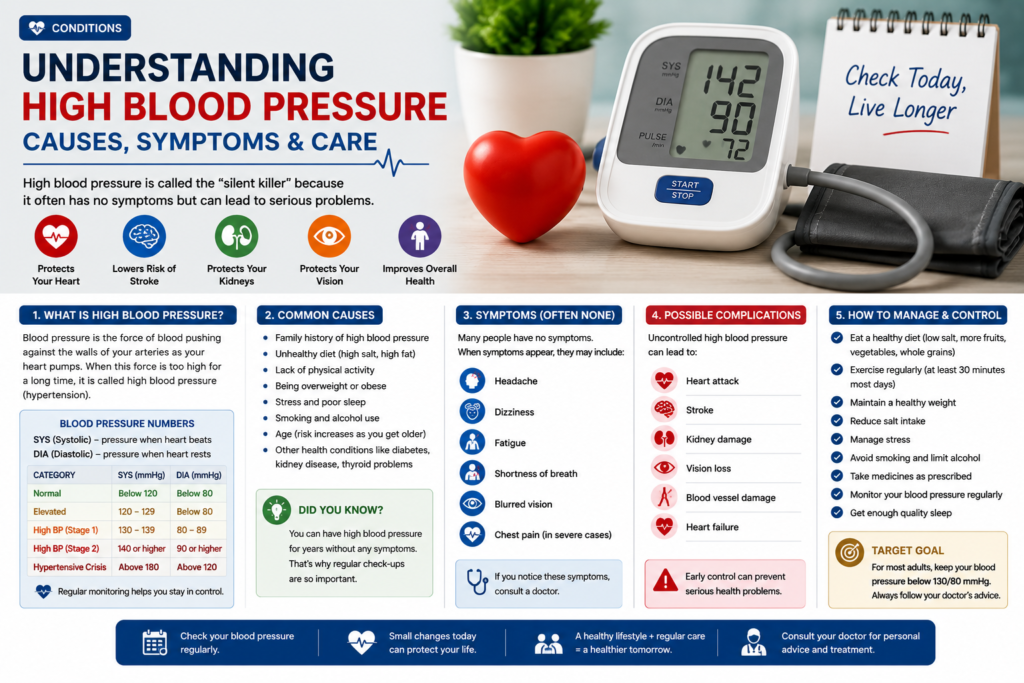
Blood pressure shows how strongly blood pushes against artery walls. It is written as two numbers, for example 120/80 mmHg.
The first number is called systolic pressure. It measures the pressure when the heart beats and pumps blood.
The second number is called diastolic pressure. It measures the pressure when the heart rests between beats.
Both numbers are important. A healthcare professional looks at the full reading, your age, your health history, your symptoms, and your overall risk before deciding whether your blood pressure needs treatment.
What Is High Blood Pressure?
High blood pressure means the pressure in your arteries stays higher than it should over time. A single high reading does not always mean a person has hypertension. Blood pressure can rise temporarily because of stress, exercise, pain, caffeine, smoking, or anxiety during a medical visit.
Doctors usually confirm high blood pressure through repeated readings or home/ambulatory monitoring. This helps avoid diagnosing someone based on one temporary reading.
High blood pressure matters because it may slowly damage the body even when the person feels completely normal.
Why High Blood Pressure Is Called a Silent Condition
Many people with high blood pressure do not feel sick. They may have no headache, no chest pain, no dizziness, and no obvious warning signs. Because of this, a person may live with high blood pressure for years without realizing it.
This silent nature makes blood pressure checks very important. You cannot reliably judge your blood pressure by how you feel. The only proper way to know is to measure it.
Regular checking is especially important for people with risk factors such as family history, older age, being overweight, diabetes, kidney disease, smoking, high salt intake, or a less active lifestyle.
Common Causes and Risk Factors
High blood pressure can develop for different reasons. In many people, there is no single clear cause. Instead, several risk factors work together over time.
Common risk factors include:
- Family history of high blood pressure
- Older age
- Being overweight or obese
- High salt intake
- Low physical activity
- Smoking
- Excess alcohol use
- Long-term stress
- Poor sleep
- Diabetes
- Kidney disease
- High cholesterol
- Unhealthy diet
- Certain medicines
- Hormonal conditions
- Pregnancy-related blood pressure problems
Some risk factors, such as age and family history, cannot be changed. Others, such as diet, activity level, smoking, and alcohol use, can be improved with lifestyle changes.
Symptoms of High Blood Pressure
Most people with high blood pressure have no symptoms. This is why it is risky to wait for symptoms before checking blood pressure.
When symptoms do appear, they may not always be caused by blood pressure alone. Possible symptoms sometimes reported with very high blood pressure or related complications may include:
- Headache
- Dizziness
- Blurred vision
- Shortness of breath
- Chest discomfort
- Nosebleeds
- Fatigue
- Confusion
- Palpitations
These symptoms can have many causes, so they should not be used to self-diagnose high blood pressure. A proper blood pressure reading is needed.
When High Blood Pressure Becomes an Emergency
Very high blood pressure with serious symptoms may need urgent medical attention. Seek emergency help if high blood pressure is linked with:
- Chest pain
- Severe shortness of breath
- Sudden weakness on one side of the body
- Sudden difficulty speaking
- Sudden confusion
- Severe headache with neurological symptoms
- Vision loss
- Fainting
- Severe dizziness
- Signs of stroke
- Severe pregnancy-related symptoms
Do not wait if symptoms suggest a heart attack, stroke, or serious complication. Emergency treatment may be needed.
How High Blood Pressure Affects the Body
High blood pressure can damage blood vessels over time. When the heart has to pump against higher pressure, it works harder than normal. This can affect several organs.
Possible complications include:
- Heart attack
- Stroke
- Heart failure
- Kidney disease
- Vision problems
- Blood vessel damage
- Memory and thinking problems
- Aneurysm
- Poor circulation
These complications are the reason hypertension should not be ignored, even if the person feels well.
High Blood Pressure and the Heart
The heart is a muscle that pumps blood throughout the body. When blood pressure is high, the heart has to work harder. Over time, this extra workload can strain the heart.
High blood pressure may increase the risk of:
- Enlarged heart muscle
- Chest pain
- Heart attack
- Heart failure
- Irregular heartbeat
- Poor blood flow
Keeping blood pressure under control helps reduce pressure on the heart and supports better cardiovascular health.
High Blood Pressure and Stroke Risk
A stroke happens when blood flow to part of the brain is blocked or when bleeding occurs in the brain. High blood pressure is one of the major risk factors for stroke because it can weaken or damage blood vessels.
Stroke warning signs may include:
- Face drooping
- Arm weakness
- Speech difficulty
- Sudden confusion
- Sudden vision trouble
- Sudden severe headache
- Sudden trouble walking
Stroke symptoms need emergency care. Quick treatment can save life and reduce long-term damage.
High Blood Pressure and Kidney Health
The kidneys filter waste and extra fluid from the blood. High blood pressure can damage the blood vessels in the kidneys, making it harder for them to work properly.
Kidney disease can also make blood pressure worse, creating a harmful cycle. People with diabetes, kidney disease, or long-term high blood pressure may need regular kidney function checks.
Protecting blood pressure helps protect kidney health.
How Blood Pressure Is Measured
Blood pressure can be measured at a clinic, pharmacy, or at home using a blood pressure monitor. The cuff is placed around the upper arm or wrist, depending on the device.
For best results:
- Sit quietly before measuring.
- Keep your back supported.
- Keep feet flat on the floor.
- Rest your arm at heart level.
- Avoid talking during the reading.
- Use the correct cuff size.
- Take readings at similar times.
- Record the results.
Home monitoring can be helpful, but the device should be reliable and used correctly. If readings are consistently high, share them with a healthcare professional.
Understanding Blood Pressure Numbers
Blood pressure numbers can be confusing because guidance may vary slightly between countries and healthcare systems. Your doctor will interpret your reading based on official local guidance and your personal health risk.
In general:
- A lower, stable reading is usually healthier.
- Repeated high readings may need lifestyle changes.
- Some people need medicine as well as lifestyle changes.
- Very high readings or symptoms need urgent attention.
- Home readings and clinic readings may differ.
Do not panic after one high reading. Repeat readings and professional assessment are important.
Lifestyle Changes That Can Help
Lifestyle changes can make a big difference in blood pressure control. Some people may lower their blood pressure with lifestyle improvements alone, while others may still need medication.
Helpful lifestyle steps include:
- Eat a balanced diet.
- Reduce salt intake.
- Stay physically active.
- Maintain a healthy weight.
- Limit alcohol.
- Stop smoking.
- Sleep well.
- Manage stress.
- Take medicines as prescribed.
- Monitor blood pressure regularly.
Small daily improvements can build long-term benefits.
Reduce Salt Intake
Salt can raise blood pressure in many people. Reducing salt is one of the most common lifestyle recommendations for blood pressure control.
Simple ways to reduce salt include:
- Avoid adding extra salt at the table.
- Read food labels.
- Limit processed foods.
- Choose fresh foods more often.
- Use herbs, lemon, garlic, or spices for flavor.
- Reduce salty snacks.
- Be careful with sauces, pickles, and packaged meals.
You do not need to remove all flavor from food. The goal is to reduce excess salt while keeping meals enjoyable.
Eat a Heart-Healthy Diet
A healthy diet supports blood pressure, cholesterol, weight, and overall heart health. Focus on foods that provide nutrients without too much salt, sugar, or unhealthy fat.
A heart-friendly diet may include:
- Fruits
- Vegetables
- Whole grains
- Beans and lentils
- Nuts and seeds
- Low-fat dairy products
- Fish
- Lean protein
- Healthy oils
- Plenty of water
Try to reduce:
- Highly processed foods
- Sugary drinks
- Fried foods
- Excess salt
- High-fat processed meats
- Large portions of sweets
- Too much fast food
Diet changes do not need to be perfect overnight. Start with small, realistic changes.
Stay Physically Active
Regular physical activity helps the heart and blood vessels work better. It can also help with weight control, stress, sleep, and blood sugar.
Helpful activities may include:
- Walking
- Cycling
- Swimming
- Light jogging
- Home workouts
- Dancing
- Strength training
- Stretching
- Active household tasks
People who are not used to exercise should start slowly. If you have heart disease, chest pain, severe shortness of breath, or other medical concerns, ask your doctor before beginning a new exercise plan.
Maintain a Healthy Weight
Extra body weight can increase the risk of high blood pressure. Losing even a modest amount of weight may help reduce blood pressure in some people.
Healthy weight management includes:
- Balanced meals
- Portion control
- Regular activity
- Better sleep
- Reducing sugary drinks
- Limiting high-calorie snacks
- Avoiding crash diets
- Building long-term habits
Weight loss should be steady and realistic. Extreme diets are difficult to maintain and may not be safe for everyone.
Limit Alcohol and Avoid Smoking
Alcohol can raise blood pressure, especially when taken in larger amounts. Reducing alcohol can support blood pressure control and overall health.
Smoking damages blood vessels and increases the risk of heart disease and stroke. Quitting smoking is one of the best steps for heart and blood vessel health.
If quitting feels difficult, professional support can help. Many people need more than one attempt, and that is normal.
Manage Stress and Sleep
Stress does not always directly cause long-term hypertension, but it can lead to habits that raise blood pressure, such as poor sleep, overeating, smoking, drinking alcohol, or avoiding exercise.
Helpful stress and sleep habits include:
- Keeping a regular sleep schedule
- Taking short walks
- Practicing deep breathing
- Reducing caffeine late in the day
- Taking breaks from screens
- Talking to someone you trust
- Organizing daily tasks
- Seeking support when overwhelmed
Sleep problems such as snoring, poor sleep quality, or possible sleep apnea should be discussed with a doctor because they may affect blood pressure.
Medicines for High Blood Pressure
Some people need medicine to control blood pressure. This does not mean they failed at lifestyle changes. High blood pressure can be influenced by genetics, age, and other medical conditions, so medicine may be necessary.
Blood pressure medicines work in different ways. Some help blood vessels relax, some help the body remove extra fluid, and others reduce strain on the heart.
Important medicine rules:
- Take medicine exactly as prescribed.
- Do not stop suddenly without medical advice.
- Report side effects.
- Attend follow-up appointments.
- Keep checking blood pressure.
- Continue healthy lifestyle habits.
- Ask before mixing with other medicines or supplements.
If one medicine does not work well or causes side effects, a doctor may adjust the dose or choose another option.
Why Regular Follow-Up Matters
Blood pressure control is not a one-time task. It needs regular monitoring and review. Your healthcare professional may check your readings, lifestyle progress, side effects, kidney function, cholesterol, diabetes risk, and overall heart health.
Regular follow-up helps:
- Confirm treatment is working
- Adjust medicine if needed
- Detect side effects early
- Check organ health
- Support lifestyle changes
- Reduce long-term risk
Even when blood pressure improves, continue following the plan. Stopping care too early may allow blood pressure to rise again.
Home Blood Pressure Monitoring Tips
Home monitoring can help you understand your blood pressure pattern. It may also help your doctor make better treatment decisions.
Useful tips include:
- Use a validated monitor.
- Choose the correct cuff size.
- Sit quietly before measuring.
- Take readings at the same time each day.
- Do not measure immediately after exercise, caffeine, or smoking.
- Record readings clearly.
- Bring your records to appointments.
- Do not adjust medicines without advice.
Home readings should support medical care, not replace it.
Quick Blood Pressure Care Checklist
Use this checklist to stay on track:
- Check blood pressure regularly.
- Know your numbers.
- Reduce salt.
- Eat more fruits and vegetables.
- Move your body most days.
- Maintain a healthy weight.
- Limit alcohol.
- Avoid smoking.
- Sleep well.
- Manage stress.
- Take medicines as prescribed.
- Keep doctor appointments.
- Ask questions if anything is unclear.
Consistency matters more than perfection.
When to Speak With a Doctor
Speak with a doctor or healthcare professional if:
- Your readings are repeatedly high
- You have a family history of hypertension
- You have diabetes or kidney disease
- You have chest pain or shortness of breath
- You are pregnant and blood pressure is high
- You feel dizzy or faint
- You have side effects from medicine
- You are unsure how to measure blood pressure
- You want to start an exercise or weight-loss plan
- You need help understanding your readings
Do not ignore repeated high readings, even if you feel fine.
Final Thoughts
High blood pressure is common, serious, and often silent. Many people do not know they have it until it is measured. Over time, uncontrolled high blood pressure can increase the risk of heart attack, stroke, kidney disease, vision problems, and other complications.
The best approach is regular checking, healthy lifestyle choices, and medical treatment when needed. Eating well, reducing salt, staying active, controlling weight, avoiding smoking, limiting alcohol, managing stress, and taking prescribed medicines can all help protect long-term health.
You cannot always feel high blood pressure, but you can measure it, manage it, and reduce its risks. A simple check today can help protect your heart, brain, kidneys, and overall health tomorrow.
Medical Disclaimer:
This article is for general information only and should not replace professional medical advice. Always speak with a qualified healthcare professional for diagnosis, treatment, blood pressure targets, and medication guidance.