Introduction
Many people visit a doctor only when they feel sick. They wait until pain, fever, weakness, or another symptom becomes hard to ignore. But good health care is not only about treating illness after it appears. It is also about finding risks early and preventing problems before they become serious.
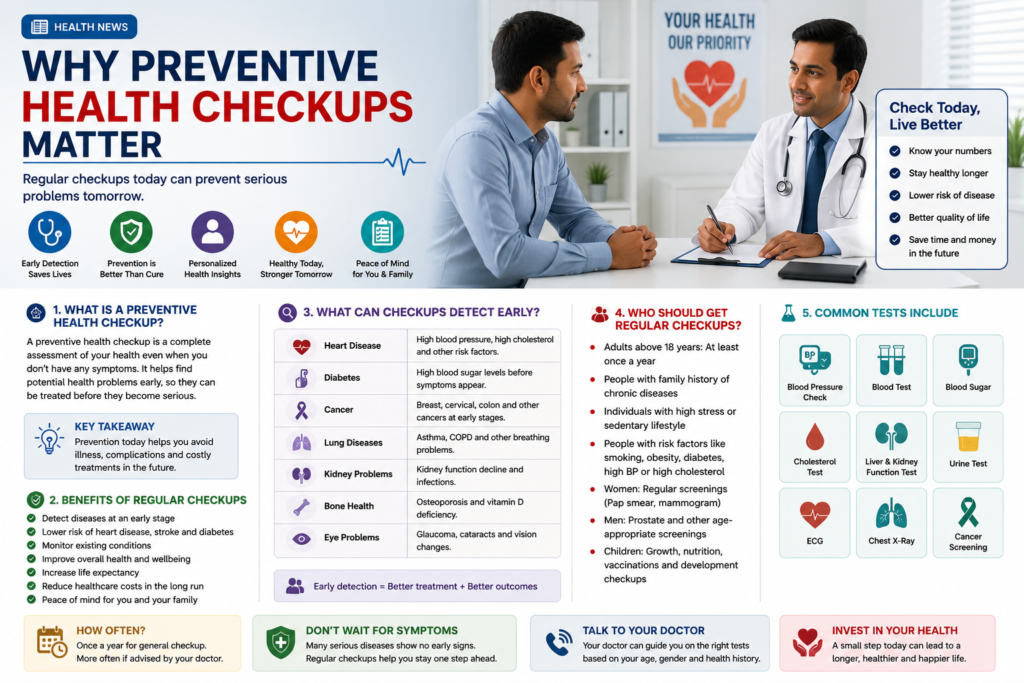
Preventive health checkups are routine medical visits that help assess your overall health, detect early warning signs, and guide better lifestyle choices. These checkups may include blood pressure measurement, blood tests, weight assessment, vaccination review, diabetes screening, cholesterol testing, cancer screening, and discussion of family history or symptoms.
A preventive checkup does not mean something is wrong. It means you are taking responsibility for your health before a problem becomes bigger.
What Is a Preventive Health Checkup?
A preventive health checkup is a planned health visit done even when you may not feel sick. The purpose is to review your current health, check for risk factors, and identify possible problems early.
A checkup may include:
- Physical examination
- Blood pressure check
- Weight and body mass index review
- Blood sugar test
- Cholesterol test
- Vaccination review
- Lifestyle discussion
- Family history review
- Medicine review
- Age-related screening advice
- Mental health discussion
- Referral for further tests if needed
The exact checkup depends on your age, gender, symptoms, personal risk factors, family history, and doctor’s advice.
Why Prevention Is Better Than Late Treatment
Many health problems start quietly. High blood pressure, diabetes, high cholesterol, kidney problems, and some cancers may not cause clear symptoms in the early stages. By the time symptoms appear, the condition may already be more difficult to treat.
Preventive care can help by:
- Finding health risks early
- Reducing the chance of complications
- Supporting timely treatment
- Helping you understand your numbers
- Encouraging healthier lifestyle habits
- Lowering long-term healthcare costs
- Improving quality of life
- Giving peace of mind
Early action is often easier, safer, and more effective than waiting until a disease becomes advanced.
Conditions That Can Be Found Early
Preventive checkups may help detect warning signs of many common conditions. Not every test is needed for every person, but the doctor may recommend screening based on your risk.
Common conditions that may be checked include:
- High blood pressure
- Diabetes
- High cholesterol
- Heart disease risk
- Kidney problems
- Liver problems
- Thyroid problems
- Anemia
- Obesity-related risks
- Vitamin deficiencies
- Certain cancers
- Eye problems
- Bone health issues
- Depression or anxiety
- Infectious disease risks
Some conditions need blood tests, while others need physical examination, imaging, questionnaires, or specialist screening.
Blood Pressure Checks
Blood pressure checking is one of the simplest and most important preventive tests. High blood pressure often has no symptoms, but it can increase the risk of heart attack, stroke, kidney disease, and other serious problems.
A blood pressure check is quick, painless, and affordable. It helps you know whether your heart and blood vessels are under extra pressure.
You may need regular checks if you:
- Are over 40
- Have a family history of high blood pressure
- Are overweight
- Smoke
- Have diabetes
- Have kidney disease
- Eat a high-salt diet
- Have high stress
- Take certain medicines
Knowing your blood pressure numbers allows you to act early.
Blood Sugar Screening
Blood sugar screening helps detect diabetes or prediabetes. Many people with early diabetes may not notice symptoms. Regular testing can identify high blood sugar before serious complications develop.
A doctor may recommend blood sugar testing if you:
- Are overweight
- Have a family history of diabetes
- Have high blood pressure
- Have high cholesterol
- Are physically inactive
- Had gestational diabetes
- Feel unusually thirsty or tired
- Urinate frequently
- Have slow wound healing
- Have blurred vision
Early diabetes care can protect the heart, kidneys, eyes, nerves, and blood vessels.
Cholesterol Testing
Cholesterol is a type of fat in the blood. Some cholesterol is needed by the body, but high levels of unhealthy cholesterol can increase the risk of heart disease and stroke.
A cholesterol test can help assess your heart health risk. It is especially important for people with:
- Family history of heart disease
- High blood pressure
- Diabetes
- Smoking habit
- Obesity
- Poor diet
- Low physical activity
- Previous heart problems
If cholesterol is high, lifestyle changes and sometimes medication can reduce risk.
Weight and Body Mass Index Review
Weight is not the only measure of health, but it can be an important risk factor. A checkup may include height, weight, waist measurement, and body mass index review.
Excess weight may increase the risk of:
- High blood pressure
- Type 2 diabetes
- Heart disease
- Joint pain
- Sleep apnea
- Fatty liver disease
- Certain cancers
The goal is not to shame anyone. The purpose is to understand health risk and create a realistic plan for improvement.
Vaccination Review
Vaccines are an important part of preventive care. Some people think vaccines are only for children, but adults also need certain vaccines at different stages of life.
A doctor may review whether you need vaccines based on:
- Age
- Job
- Travel plans
- Medical conditions
- Pregnancy
- Previous vaccination history
- Immune system status
- Seasonal illness risk
Staying up to date with vaccination can help protect you and the people around you, especially children, older adults, and people with weak immune systems.
Cancer Screening
Cancer screening aims to find certain cancers early, sometimes before symptoms appear. Screening recommendations depend on age, gender, family history, and risk factors.
Common cancer screening areas may include:
- Breast cancer
- Cervical cancer
- Colorectal cancer
- Prostate cancer discussion
- Skin checks
- Lung cancer screening for selected high-risk people
Not every person needs every screening test. Your doctor can guide you on what is appropriate for your age and risk.
Medicine Review
A preventive visit is also a good time to review medicines. This is especially important if you take several prescriptions, over-the-counter medicines, vitamins, or supplements.
A medicine review can help identify:
- Duplicate medicines
- Incorrect doses
- Possible drug interactions
- Side effects
- Medicines no longer needed
- Missed refills
- Unsafe combinations
- Better treatment options
Bring a full medicine list to your checkup. Include prescription medicines, pain relievers, cold medicines, herbal products, and supplements.
Family History Review
Family history can affect your risk for many conditions. If close family members have diabetes, high blood pressure, heart disease, stroke, cancer, or kidney disease, your doctor may recommend earlier or more frequent screening.
Tell your doctor if your family has a history of:
- Heart attack at a young age
- Stroke
- High blood pressure
- Diabetes
- Breast cancer
- Colon cancer
- Kidney disease
- High cholesterol
- Thyroid disease
- Genetic conditions
Family history does not guarantee that you will develop the same condition, but it helps your doctor understand your risk.
Lifestyle Discussion
A checkup is not only about tests. It is also a chance to discuss your daily habits.
Your doctor may ask about:
- Diet
- Exercise
- Sleep
- Stress
- Smoking
- Alcohol use
- Work routine
- Mental health
- Sexual health
- Screen time
- Weight changes
- Energy level
Honest answers help your doctor give better advice. The goal is not judgment. The goal is practical improvement.
Mental Health Check
Mental health is an important part of preventive care. Stress, anxiety, depression, poor sleep, and burnout can affect physical health too.
During a checkup, it may be useful to discuss:
- Low mood
- Constant worry
- Panic symptoms
- Sleep problems
- Loss of interest
- Irritability
- Fatigue
- Work stress
- Family pressure
- Difficulty concentrating
Mental health support is not only for crisis situations. Early support can prevent symptoms from getting worse.
Dental and Eye Health
Preventive care also includes dental and eye health. Many people ignore these areas until pain or vision problems appear.
Regular dental care can help prevent:
- Tooth decay
- Gum disease
- Bad breath
- Tooth loss
- Infection
- Painful emergency treatment
Eye checks may help detect:
- Vision changes
- Glaucoma
- Cataracts
- Diabetes-related eye problems
- High blood pressure-related eye changes
People with diabetes or high blood pressure may need eye checks more regularly.
Who Should Get Regular Checkups?
Preventive checkups are useful for almost everyone, but some people may need them more often.
Regular checkups are especially important for:
- Adults over 40
- People with family history of chronic disease
- People with high blood pressure
- People with diabetes
- People with high cholesterol
- Smokers
- People who are overweight
- Pregnant women
- Older adults
- People taking long-term medicines
- People with long-term health conditions
- People with high-stress lifestyles
The right schedule depends on your personal health profile.
How Often Should You Have a Checkup?
There is no single schedule that fits everyone. Some healthy adults may need a general checkup once a year or every few years, while others need more frequent monitoring.
Checkup frequency depends on:
- Age
- Existing conditions
- Family history
- Test results
- Lifestyle risks
- Pregnancy status
- Medicine use
- Doctor’s recommendation
If you already have high blood pressure, diabetes, kidney disease, heart disease, or another chronic condition, your doctor may recommend regular follow-up visits.
Preparing for a Preventive Checkup
A little preparation can make your checkup more useful.
Before your appointment, prepare:
- List of current medicines
- List of supplements
- Previous test reports
- Vaccination records
- Family health history
- Symptoms or concerns
- Questions for the doctor
- Home blood pressure or sugar readings
- Allergy information
- Lifestyle notes
Being prepared saves time and helps your doctor give better advice.
Questions to Ask During Your Checkup
You can ask your doctor:
- Is my blood pressure normal?
- Should I test my blood sugar?
- Should I check my cholesterol?
- Do I need any vaccines?
- Am I at risk for heart disease?
- Do I need cancer screening?
- Is my weight affecting my health?
- Are my medicines still suitable?
- What lifestyle change should I focus on first?
- When should I come back?
Good questions lead to better care.
What If Your Results Are Normal?
Normal results are good news, but they do not mean you should ignore health in the future. A normal checkup gives you a baseline. It helps compare future results and notice changes early.
If results are normal, your doctor may still recommend:
- Healthy eating
- Regular exercise
- Better sleep
- Stress control
- Vaccination updates
- Repeat screening later
- Avoiding smoking
- Limiting alcohol
- Maintaining a healthy weight
Prevention continues even when everything looks fine.
What If a Problem Is Found?
If a checkup finds a health concern, do not panic. Early detection gives you a better chance to act before complications develop.
Your doctor may suggest:
- Repeat testing
- Lifestyle changes
- Medicine
- Specialist referral
- Imaging tests
- Follow-up appointment
- Monitoring at home
- Diet or exercise plan
Finding a problem early is not failure. It is an opportunity to protect your health.
Common Mistakes People Make
Many people delay checkups because they feel healthy or are afraid of results.
Common mistakes include:
- Waiting for symptoms
- Ignoring family history
- Skipping blood pressure checks
- Avoiding tests because of fear
- Not telling the doctor about supplements
- Forgetting medicine names
- Not following up abnormal results
- Stopping treatment when feeling better
- Missing vaccination updates
- Thinking young adults do not need prevention
Preventive care works best when it is consistent.
Final Thoughts
Preventive health checkups are a smart investment in your future. They help detect risks early, guide healthier choices, and support better long-term outcomes. Many serious conditions can begin quietly, so waiting for symptoms is not always safe.
A good checkup can help you understand your blood pressure, blood sugar, cholesterol, weight, vaccination status, family risk, and overall health. It also gives you a chance to ask questions and make a clear plan with your healthcare provider.
Taking time for a checkup today may help prevent bigger health problems tomorrow. Prevention is not fear — it is preparation.
Medical Disclaimer:
This article is for general information only and should not replace professional medical advice. Screening needs vary by age, health history, symptoms, and local medical guidelines. Always speak with a qualified healthcare professional for personal advice.