Introduction
Allergies can make daily life uncomfortable. Sneezing, runny nose, blocked nose, itchy eyes, watery eyes, skin rash, and itching can affect sleep, work, school, and normal activities. For many people, allergy medicines provide useful relief and help control symptoms.
However, not every allergy medicine works the same way. Some help with sneezing and itching, some help with nasal congestion, some reduce inflammation in the nose, and some are made for eye or skin symptoms. Choosing the right medicine depends on your symptoms, age, health condition, other medicines, and how your body reacts.
This guide explains common allergy medicines, how they work, possible side effects, and important safety tips before using them.
What Is an Allergy?
An allergy happens when the immune system reacts strongly to something that is usually harmless. This trigger is called an allergen. When the body sees the allergen as a threat, it releases chemicals such as histamine. Histamine can cause many common allergy symptoms.
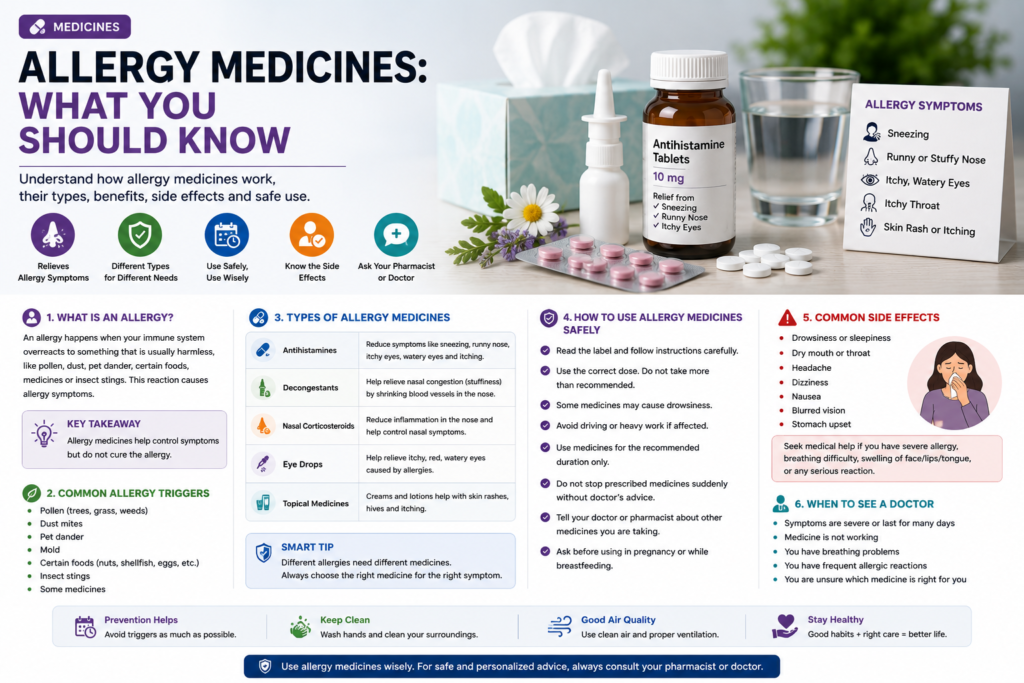
Common allergy symptoms include:
- Sneezing
- Runny nose
- Blocked nose
- Itchy nose
- Itchy or watery eyes
- Skin rash
- Hives
- Itching
- Cough
- Throat irritation
- Swelling in some cases
Allergy symptoms may be mild, moderate, or severe. Some people have seasonal allergies, while others have symptoms all year.
Common Allergy Triggers
Different people react to different allergens. Identifying triggers can help reduce symptoms and avoid repeated exposure.
Common triggers include:
- Pollen
- Dust mites
- Pet dander
- Mold
- Insect bites or stings
- Certain foods
- Certain medicines
- Latex
- Fragrances
- Smoke
- Air pollution
- Household chemicals
Avoiding triggers is not always possible, but reducing exposure can make medicines work better and may lower the need for frequent treatment.
What Are Allergy Medicines?
Allergy medicines are treatments used to reduce or control allergy symptoms. Some are available without a prescription, while others require a doctor’s advice.
Common allergy medicine types include:
- Antihistamines
- Decongestants
- Nasal corticosteroid sprays
- Saline nasal sprays
- Eye drops
- Skin creams
- Leukotriene receptor antagonists
- Emergency allergy medicines for severe reactions
The right medicine depends on the type of allergy and symptoms. For example, itchy eyes may need eye drops, while nasal symptoms may need a nasal spray or antihistamine.
Antihistamines
Antihistamines are among the most common allergy medicines. They work by blocking the effect of histamine, the chemical that causes many allergy symptoms.
Antihistamines may help with:
- Sneezing
- Runny nose
- Itchy eyes
- Watery eyes
- Hives
- Itchy skin
- Insect bite reactions
- Mild allergic rashes
They are available as tablets, capsules, liquids, nasal sprays, and eye drops.
Drowsy and Non-Drowsy Antihistamines
Some antihistamines can cause sleepiness. These are often called sedating or drowsy antihistamines. Others are less likely to cause drowsiness and are often called non-drowsy antihistamines.
Drowsy antihistamines may affect:
- Driving
- Studying
- Working
- Operating machinery
- Reaction time
- Balance
- Concentration
Even medicines labeled “non-drowsy” can still make some people sleepy. The first time you take an allergy medicine, notice how your body responds before driving or doing important tasks.
Decongestants
Decongestants help reduce nasal blockage by narrowing swollen blood vessels in the nose. They may be useful when the main symptom is a blocked or stuffy nose.
Decongestants may come as:
- Tablets
- Capsules
- Liquids
- Nasal sprays
- Nasal drops
They should be used carefully because they are not suitable for everyone. People with high blood pressure, heart disease, thyroid problems, glaucoma, prostate problems, or certain medicine use should ask a doctor or pharmacist before taking decongestants.
Nasal decongestant sprays should usually be used only for a short time, because overuse can make congestion worse.
Nasal Corticosteroid Sprays
Nasal corticosteroid sprays help reduce inflammation inside the nose. They can be useful for hay fever and long-term allergic rhinitis.
They may help with:
- Blocked nose
- Runny nose
- Sneezing
- Itchy nose
- Post-nasal drip
These sprays may not work immediately. Some people need to use them regularly for several days before full benefit appears. Correct spraying technique matters. Aim slightly away from the center of the nose and follow the product instructions.
Saline Nasal Sprays and Rinses
Saline sprays and rinses contain saltwater. They do not contain allergy medicine, but they can help clear mucus, pollen, dust, and irritants from the nose.
They may be useful for:
- Dry nose
- Mild congestion
- Removing allergens
- Supporting nasal spray treatment
- Reducing irritation
Use clean or sterile water according to product instructions when preparing nasal rinses. Poor hygiene can create infection risks.
Allergy Eye Drops
Allergy eye drops can help with eye symptoms such as itching, redness, and watering. Some eye drops contain antihistamines or other ingredients to reduce allergic irritation.
Eye drops may help with:
- Itchy eyes
- Watery eyes
- Red eyes
- Swelling around the eyes
- Seasonal allergy symptoms
Do not use eye drops for eye pain, vision changes, injury, or severe redness without medical advice. Contact lens users should check whether the drops are suitable with lenses.
Skin Allergy Treatments
Skin allergy symptoms may include itching, redness, rash, hives, or swelling. Treatment depends on the cause and severity.
Common options may include:
- Oral antihistamines
- Calming skin lotions
- Moisturizers
- Mild steroid creams
- Prescription creams
- Cold compresses
- Avoiding the trigger
If the rash is severe, spreading, painful, infected, or linked with breathing difficulty or swelling of the face, urgent medical advice is needed.
Food Allergies
Food allergies can be mild or severe. Some food allergies can cause anaphylaxis, a serious allergic reaction that may be life-threatening.
Common food allergy triggers include:
- Peanuts
- Tree nuts
- Shellfish
- Fish
- Eggs
- Milk
- Wheat
- Soy
People with known serious food allergies should follow their doctor’s emergency plan and carry prescribed emergency medicine if advised.
Antihistamines may help with mild symptoms in some situations, but they are not a replacement for emergency treatment in a severe allergic reaction.
Medicine Allergies
Some people are allergic to certain medicines. A medicine allergy should be taken seriously and recorded clearly.
Possible signs of medicine allergy include:
- Rash
- Hives
- Itching
- Swelling
- Wheezing
- Trouble breathing
- Dizziness
- Severe skin reaction
- Fever with rash
If you have had a medicine allergy before, tell every doctor, dentist, and pharmacist. Do not take the same medicine again unless a specialist confirms it is safe.
Severe Allergic Reactions
A severe allergic reaction is called anaphylaxis. It can happen quickly and may affect breathing, blood pressure, skin, stomach, and circulation.
Warning signs may include:
- Trouble breathing
- Swelling of face, lips, tongue, or throat
- Wheezing
- Tight chest
- Severe dizziness
- Fainting
- Fast heartbeat
- Confusion
- Severe hives
- Vomiting or stomach cramps after allergen exposure
Anaphylaxis is a medical emergency. If severe symptoms occur, emergency care is needed immediately.
How to Choose the Right Allergy Medicine
Choosing the right allergy medicine depends on your main symptoms.
A simple guide:
- Sneezing and runny nose: antihistamine may help.
- Itchy, watery eyes: allergy eye drops may help.
- Blocked nose: nasal spray or decongestant may help.
- Long-term nasal allergy: nasal corticosteroid spray may help.
- Skin hives or itching: antihistamine may help.
- Severe reaction: emergency medical care is needed.
If symptoms are frequent, severe, or not improving, speak with a doctor or pharmacist instead of switching medicines repeatedly on your own.
Side Effects of Allergy Medicines
Side effects depend on the type of medicine. Some people have no side effects, while others may feel uncomfortable.
Possible side effects include:
- Drowsiness
- Dry mouth
- Dizziness
- Headache
- Nausea
- Blurred vision
- Stomach upset
- Nose dryness
- Nose irritation
- Fast heartbeat with some decongestants
- Trouble sleeping with some medicines
Read the medicine leaflet and follow label instructions. If side effects are severe or worrying, speak with a healthcare professional.
Allergy Medicines and Driving
Some allergy medicines can cause drowsiness and reduce alertness. This can make driving unsafe.
Before driving, ask:
- Does this medicine cause drowsiness?
- Have I taken it before?
- Am I also taking alcohol, sleep medicine, or anxiety medicine?
- Do I feel sleepy, dizzy, or slow?
- Is there a warning label about driving?
If a medicine makes you sleepy, do not drive or operate machinery. Ask a pharmacist about a less drowsy option.
Allergy Medicines and Alcohol
Alcohol can increase sleepiness with some allergy medicines. It may also worsen dizziness and reduce coordination.
Avoid alcohol if the label says not to drink while taking the medicine. Be especially careful with sedating antihistamines and combination cold/allergy products.
Allergy Medicines for Children
Children need special care with allergy medicines. The dose depends on age, weight, product strength, and medicine type.
Before giving allergy medicine to a child, check:
- Is the medicine suitable for the child’s age?
- What is the correct dose?
- How often can it be given?
- Is it drowsy?
- Is the child taking other medicine?
- Does the child have asthma or another health condition?
- Should a doctor be consulted first?
Do not give adult allergy medicine to children unless a healthcare professional says it is safe.
Allergy Medicines During Pregnancy or Breastfeeding
Pregnant or breastfeeding patients should ask a doctor or pharmacist before using allergy medicine. Some medicines may be suitable, but the safest choice depends on the person, pregnancy stage, symptoms, and baby’s health.
Do not assume that a medicine is safe only because it is available without a prescription.
Preventing Allergy Symptoms
Medicine can help, but prevention can reduce symptoms too.
Practical prevention tips include:
- Keep windows closed during high pollen times.
- Shower after outdoor exposure.
- Change clothes after being outside.
- Wash bedding regularly.
- Use dust mite covers if needed.
- Keep pets out of the bedroom if pet dander triggers symptoms.
- Clean mold-prone areas.
- Avoid known food triggers.
- Read food and medicine labels carefully.
- Keep emergency medicine available if prescribed.
Reducing exposure can lower allergy flare-ups and medicine use.
When to See a Doctor
Speak with a doctor if:
- Symptoms are severe
- Symptoms last many days
- Allergy medicine is not helping
- You have breathing problems
- You have frequent sinus infections
- You have repeated hives
- You have swelling of the face or throat
- You have asthma symptoms
- You are unsure what is causing the allergy
- You need allergy medicine often
- A child has ongoing symptoms
A doctor may recommend allergy testing, prescription medicine, or specialist care.
Quick Allergy Medicine Safety Checklist
Before taking allergy medicine, ask yourself:
- What symptom am I treating?
- Is this the right medicine for that symptom?
- Have I read the label?
- Can it cause drowsiness?
- Can I drive after taking it?
- Can I take it with my other medicines?
- Is it safe with my health conditions?
- Is it suitable for my age?
- Am I pregnant or breastfeeding?
- Do I need a doctor’s advice?
When in doubt, ask a pharmacist.
Final Thoughts
Allergy medicines can provide helpful relief from sneezing, runny nose, itchy eyes, hives, and other allergy symptoms. But choosing the right medicine matters. Antihistamines, decongestants, nasal sprays, eye drops, and skin treatments all work differently.
Always read the label, follow the correct dose, and check warnings about drowsiness, driving, alcohol, pregnancy, children, and other medicines. If symptoms are severe, frequent, or not improving, speak with a healthcare professional.
Safe allergy care is not only about taking medicine. It is also about knowing your triggers, preventing exposure where possible, and asking for help when symptoms are difficult to control.
Medical Disclaimer:
This article is for general information only and should not replace professional medical advice. Always speak with a qualified doctor or pharmacist before starting, stopping, combining, or changing any medicine.