Introduction
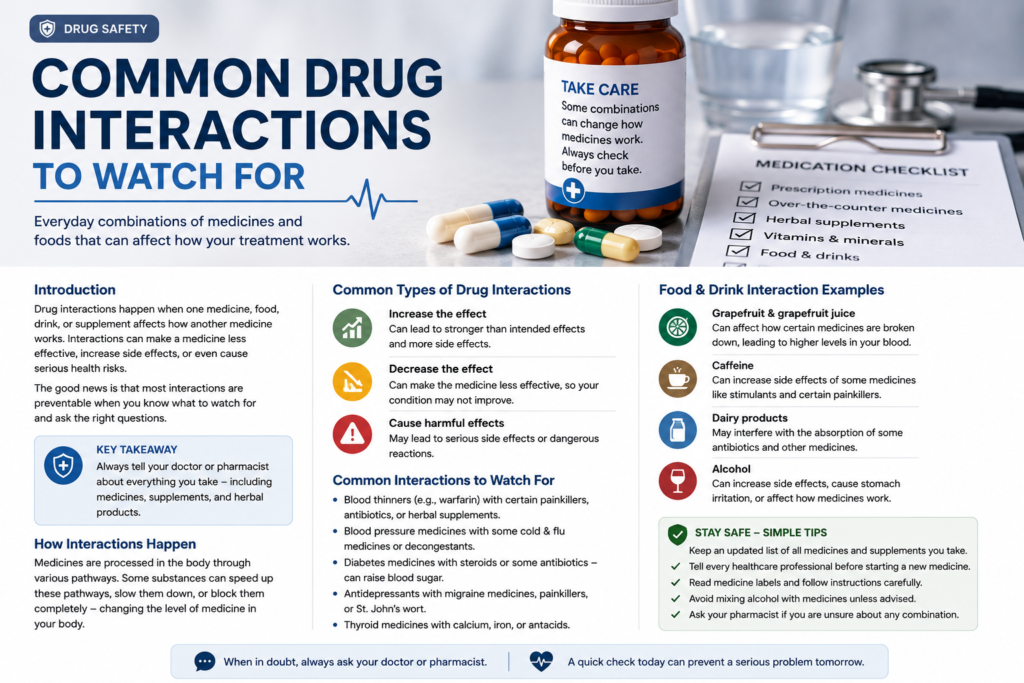
Medicines can help treat illness, control symptoms, and improve quality of life. But sometimes, one medicine can affect how another medicine works. Food, drinks, supplements, and even certain health conditions can also change the way a medicine acts inside the body.
This is known as a drug interaction. Some interactions are mild, but others can reduce treatment effectiveness, increase side effects, or create serious health risks. The good news is that many drug interactions can be prevented by reading labels, asking the right questions, and keeping your doctor or pharmacist informed about everything you take.
This guide explains the most common types of drug interactions, examples to watch for, warning signs, and practical steps you can take to use medicines more safely.
What Is a Drug Interaction?
A drug interaction happens when something changes the way a medicine works in your body. That “something” may be another medicine, a food, a drink, a supplement, or a medical condition.
A drug interaction may:
- Make a medicine stronger than expected
- Make a medicine weaker than expected
- Increase side effects
- Cause new or unexpected symptoms
- Make treatment less effective
- Create a serious health risk in some people
Not every interaction is dangerous, but every possible interaction should be taken seriously. A pharmacist or doctor can help check whether a combination is safe.
Main Types of Drug Interactions
Drug interactions are usually grouped into a few common types. Understanding these types makes it easier to know what to watch for.
1. Drug-Drug Interactions
A drug-drug interaction happens when two or more medicines affect each other. This can happen with prescription medicines, over-the-counter medicines, or a mix of both.
For example, a medicine that causes drowsiness may become more sedating when taken with another medicine that also causes sleepiness. This can make driving, working, or using machinery unsafe.
Drug-drug interactions are more likely when a person takes several medicines every day, sees more than one doctor, or uses medicine without checking the active ingredients.
2. Drug-Food and Drug-Drink Interactions
Some foods and drinks can affect how medicines are absorbed, broken down, or used by the body. This can make the medicine too strong, too weak, or more likely to cause side effects.
Examples may include:
- Alcohol with medicines that cause drowsiness
- Grapefruit or grapefruit juice with certain medicines
- Dairy products with some antibiotics
- High-vitamin K foods with certain blood thinners
- Caffeine with some stimulant medicines
- Certain juices with selected medicines
This does not mean all foods must be avoided with all medicines. It means each medicine should be checked individually.
3. Drug-Supplement Interactions
Supplements can also interact with medicines. Many people think vitamins, minerals, and herbal products are always safe because they are “natural,” but natural products can still affect the body strongly.
Supplements that may need extra caution include:
- St. John’s wort
- Ginkgo biloba
- Garlic supplements
- Ginseng
- Fish oil
- High-dose vitamins
- Iron
- Calcium
- Magnesium
- Potassium supplements
Some supplements may change bleeding risk, blood pressure, blood sugar, or how the liver processes medicines. Always tell your doctor or pharmacist about supplements, even if you bought them without a prescription.
4. Drug-Condition Interactions
Some medicines may be risky for people with certain health conditions. A medicine that is suitable for one person may not be safe for another person with a different medical history.
Extra care may be needed if you have:
- High blood pressure
- Heart disease
- Kidney disease
- Liver disease
- Diabetes
- Asthma or breathing problems
- Stomach ulcers
- Glaucoma
- Seizure disorders
- Pregnancy or breastfeeding
- History of drug allergies
This is why healthcare professionals ask about your medical history before recommending medicine.
Common Interaction Examples to Watch For
Below are common interaction areas that patients should know about. These examples are for general awareness only. They do not include every possible interaction.
Blood Thinners and Other Medicines
Blood thinners are used to reduce the risk of harmful blood clots. Because they affect clotting, they must be used carefully with other medicines and supplements.
Possible interaction concerns may include:
- Some pain relievers
- Some antibiotics
- Some herbal supplements
- Certain anti-inflammatory medicines
- Some heart medicines
- Certain foods, depending on the blood thinner
A small change in bleeding risk can matter for someone taking a blood thinner. Warning signs may include unusual bruising, nosebleeds, blood in urine or stool, or bleeding that takes longer to stop.
Anyone taking a blood thinner should speak with a doctor or pharmacist before starting a new medicine, supplement, or herbal product.
Pain Relievers and Stomach or Kidney Risk
Many people use pain relievers without thinking of them as serious medicines. However, pain relievers can interact with other medicines and may not be suitable for everyone.
Some pain relievers may increase the risk of:
- Stomach irritation
- Stomach bleeding
- Kidney problems
- Blood pressure changes
- Bleeding risk when combined with blood thinners
This is especially important for older adults, people with kidney disease, people with stomach ulcers, and those taking medicines for blood pressure or clot prevention.
Before taking regular pain relief, check whether it is safe with your current medicines and health conditions.
Cold and Flu Medicines With Other Treatments
Cold and flu products often contain more than one active ingredient. A single product may include medicine for fever, pain, blocked nose, cough, or allergy symptoms.
The risk is that someone may accidentally take the same ingredient twice. For example, a person may take a pain reliever separately and also take a cold medicine that contains the same pain-relief ingredient.
Cold and flu medicine may also be a concern for people with:
- High blood pressure
- Heart disease
- Thyroid problems
- Glaucoma
- Prostate problems
- Diabetes
- Breathing problems
- Sleepiness from other medicines
Always read the active ingredient section before taking a cold or flu product.
Antihistamines and Drowsiness
Antihistamines are often used for allergies, runny nose, sneezing, itching, or sleep-related products. Some antihistamines can cause drowsiness.
Drowsiness may become stronger when antihistamines are combined with:
- Alcohol
- Sleeping tablets
- Anxiety medicines
- Some pain medicines
- Muscle relaxants
- Other medicines that cause sleepiness
This can affect driving, concentration, balance, and reaction time. Older adults may be more sensitive to these effects.
Antibiotics and Other Medicines
Antibiotics can interact with some medicines, foods, and supplements. The interaction depends on the type of antibiotic.
Some antibiotics may interact with:
- Blood thinners
- Antacids
- Calcium supplements
- Iron supplements
- Magnesium supplements
- Certain heart medicines
- Some diabetes medicines
- Alcohol, depending on the antibiotic
Do not assume all antibiotics have the same rules. Always ask whether the antibiotic should be taken with food, away from dairy products, or separated from vitamins and minerals.
Grapefruit and Certain Medicines
Grapefruit and grapefruit juice can affect how the body handles certain medicines. In some cases, this may increase the amount of medicine in the blood and raise the risk of side effects.
Grapefruit may be a concern with some medicines used for:
- Cholesterol
- Blood pressure
- Heart rhythm
- Anxiety
- Organ transplant care
- Certain infections
Not every medicine interacts with grapefruit, but the interaction can be important when it does. Check the medicine label or ask a pharmacist if grapefruit should be avoided.
Alcohol and Medicines
Alcohol can interact with many medicines. It may increase drowsiness, affect coordination, irritate the stomach, or place extra stress on the liver.
Alcohol may be risky with:
- Sleeping medicines
- Anxiety medicines
- Some pain medicines
- Some antibiotics
- Antidepressants
- Antihistamines
- Some diabetes medicines
- Medicines that affect the liver
If the label says to avoid alcohol, take that warning seriously. When unsure, ask a pharmacist before drinking alcohol while taking medicine.
Supplements and Surgery
Supplements can matter before surgery or dental procedures. Some supplements may affect bleeding, heart rate, blood pressure, or the way anesthesia and other medicines work.
Before surgery, always tell your healthcare team about:
- Vitamins
- Herbal supplements
- Protein powders
- Mineral supplements
- Fish oil
- “Natural” health products
- Weight-loss products
- Energy supplements
Do not wait until the day of surgery. Your healthcare professional may advise stopping certain supplements before the procedure.
Why Older Adults Need Extra Care
Older adults are more likely to take several medicines at the same time. The body also changes with age, which can affect how medicines are absorbed, processed, and removed.
Interaction risk may increase because of:
- Multiple prescriptions
- Multiple doctors
- Over-the-counter medicine use
- Supplements
- Kidney or liver changes
- Memory issues with dosing
- Higher sensitivity to side effects
A regular medication review with a doctor or pharmacist can help reduce avoidable risks.
Warning Signs of a Possible Drug Interaction
A drug interaction may not always be obvious. Sometimes symptoms appear soon after starting a new medicine. Other times, they develop slowly.
Possible warning signs include:
- Unusual sleepiness
- Dizziness
- Confusion
- Fast or irregular heartbeat
- Severe stomach upset
- New rash
- Unusual bruising or bleeding
- Severe headache
- Trouble breathing
- Swelling of the face, lips, tongue, or throat
- Fainting
- Very low or very high blood pressure
- Blood sugar changes
- Symptoms becoming worse after starting medicine
Severe symptoms should be treated as urgent. If you suspect a serious reaction, seek medical help immediately.
How to Prevent Drug Interactions
Many drug interactions can be avoided with simple habits. The most important step is to keep all healthcare professionals informed.
Use this safety checklist:
- Keep an updated list of all medicines.
- Include vitamins, minerals, and herbal supplements.
- Include over-the-counter medicines.
- Share the list with every doctor and pharmacist.
- Use one pharmacy when possible.
- Read the label every time.
- Check active ingredients carefully.
- Ask before mixing medicines.
- Ask whether food or alcohol should be avoided.
- Do not take someone else’s medicine.
- Do not use old leftover medicine.
- Follow dose and timing instructions exactly.
A medication list can be kept on your phone, in your wallet, or printed and stored with your medical documents.
Questions to Ask Your Doctor or Pharmacist
Before starting a new medicine, ask:
- Can I take this with my current medicines?
- Should I avoid any food or drink?
- Can I take this with supplements?
- What side effects should I watch for?
- What should I do if I miss a dose?
- Should I take it with food or on an empty stomach?
- Can I drive after taking it?
- Is alcohol safe with this medicine?
- How long should I take it?
- When should I call for help?
These questions are simple, but they can prevent serious mistakes.
What to Do If You Think You Have an Interaction
If you think a medicine combination is causing a problem, do not panic. But do not ignore it either.
Take these steps:
- Stop and check what you have taken.
- Write down the medicine names, doses, and times.
- Check if you also took supplements, alcohol, or certain foods.
- Contact your pharmacist, doctor, or local medical advice service.
- Seek urgent help for severe symptoms.
Do not stop important prescription medicines suddenly unless a healthcare professional tells you to, because stopping some medicines quickly can also be dangerous.
Final Thoughts
Drug interactions are common enough that every patient should know the basics. A medicine can interact with another medicine, food, drink, supplement, or health condition. These interactions may reduce benefits, increase side effects, or create serious risks.
The safest habit is to treat every medicine carefully, even if it is available without a prescription. Read the label, check active ingredients, keep a complete medicine list, and ask your doctor or pharmacist before adding anything new.
A quick question today can prevent a serious medicine problem tomorrow.
Medical Disclaimer:
This article is for general information only and should not replace professional medical advice. Always speak with a qualified doctor or pharmacist before starting, stopping, combining, or changing any medicine.