Introduction
Diabetes is a long-term health condition that affects how the body manages blood sugar. Blood sugar, also called blood glucose, comes mainly from the food we eat and is an important source of energy. The body uses a hormone called insulin to help move glucose from the blood into the cells.
When someone has diabetes, the body either does not make enough insulin or cannot use insulin properly. As a result, glucose stays too high in the blood. Over time, high blood sugar can damage the heart, kidneys, eyes, nerves, blood vessels, gums, and feet.
Diabetes can feel overwhelming at first, but it can be managed. With regular monitoring, healthy eating, physical activity, medicine when needed, and routine checkups, many people with diabetes live active and healthy lives.
What Is Diabetes?
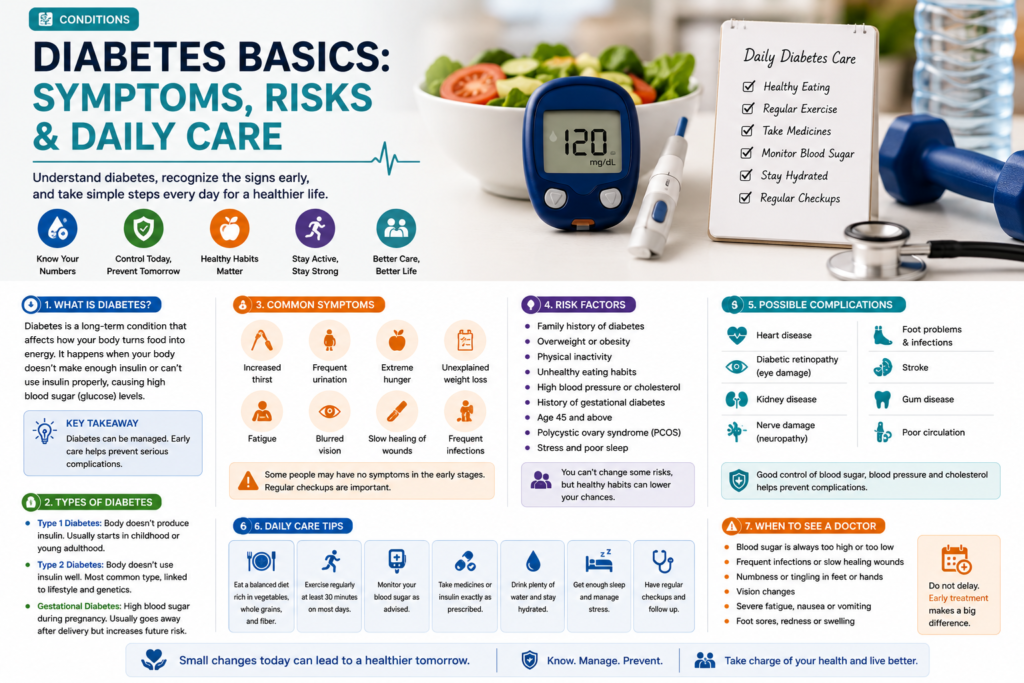
Diabetes is a condition where blood sugar levels stay higher than normal. This happens because the body has a problem with insulin production or insulin use.
Insulin acts like a key. It helps glucose enter the body’s cells so it can be used for energy. Without enough insulin, or when insulin does not work properly, glucose builds up in the bloodstream.
High blood sugar may not always cause symptoms immediately, but it can slowly affect different parts of the body. That is why early diagnosis and daily care are important.
Main Types of Diabetes
There are different types of diabetes. The most common types are type 1 diabetes, type 2 diabetes, and gestational diabetes.
Type 1 Diabetes
Type 1 diabetes usually happens when the body does not make insulin. It often begins in childhood or young adulthood, but it can happen at any age.
People with type 1 diabetes usually need insulin treatment every day. This type is not caused by eating too much sugar or by lifestyle alone.
Type 2 Diabetes
Type 2 diabetes is the most common type. It happens when the body does not use insulin properly or does not make enough insulin to keep blood sugar in a healthy range.
Type 2 diabetes is linked with several risk factors, including family history, age, weight, physical inactivity, and other health conditions. Some people can manage it with lifestyle changes, while others need medicine or insulin.
Gestational Diabetes
Gestational diabetes happens during pregnancy. It usually goes away after delivery, but it can increase the risk of type 2 diabetes later in life for both mother and child.
Pregnant women should follow their doctor’s advice about screening, diet, monitoring, and treatment.
Common Symptoms of Diabetes
Diabetes symptoms can appear slowly, especially in type 2 diabetes. Some people have mild symptoms or no symptoms at all in the beginning.
Common symptoms may include:
- Feeling very thirsty
- Passing urine often
- Feeling very tired
- Unexplained weight loss
- Blurred vision
- Feeling very hungry
- Slow healing of cuts or wounds
- Frequent infections
- Tingling or numbness in hands or feet
- Dry mouth
- Itchy skin
These symptoms can have other causes too, so a blood test is needed to confirm diabetes.
Why Some People Do Not Notice Symptoms
Many people with type 2 diabetes do not feel clearly sick at first. Blood sugar may rise gradually, and the body may adjust to the changes. Because of this, diabetes may only be found during a routine blood test.
This is why screening is important for people with risk factors. Waiting for symptoms can delay diagnosis and increase the chance of complications.
Risk Factors for Type 2 Diabetes
Some people have a higher chance of developing type 2 diabetes. Risk can increase because of family history, lifestyle, age, and other medical conditions.
Common risk factors include:
- Family history of diabetes
- Being overweight or obese
- Low physical activity
- High blood pressure
- High cholesterol
- Prediabetes
- History of gestational diabetes
- Polycystic ovary syndrome
- Older age
- Unhealthy eating habits
- Smoking
- Poor sleep
- Long-term stress
- Certain ethnic backgrounds
- Heart disease history
Some risk factors cannot be changed, but many daily habits can be improved.
What Is Prediabetes?
Prediabetes means blood sugar is higher than normal but not high enough to be diagnosed as type 2 diabetes. It is an important warning sign.
Many people with prediabetes do not know they have it. With lifestyle changes, some people can delay or prevent type 2 diabetes.
Helpful steps may include:
- Losing extra weight if needed
- Eating a balanced diet
- Reducing sugary drinks
- Being physically active
- Sleeping better
- Managing stress
- Getting regular checkups
Prediabetes should be taken seriously because it also increases the risk of heart disease and stroke.
How Diabetes Is Diagnosed
Diabetes is diagnosed with blood tests. A doctor may choose one or more tests based on symptoms, risk factors, and medical history.
Common tests may include:
- Fasting blood glucose test
- HbA1c test
- Random blood glucose test
- Oral glucose tolerance test
The HbA1c test gives an idea of average blood sugar over the past few months. Your doctor will explain what your result means and whether repeat testing is needed.
Do not diagnose diabetes only by symptoms. Proper testing is necessary.
Why Blood Sugar Control Matters
Keeping blood sugar in a healthy range helps reduce the risk of diabetes complications. Blood sugar that stays too high can slowly damage blood vessels and nerves.
Good control can help protect:
- Heart
- Brain
- Kidneys
- Eyes
- Feet
- Nerves
- Gums
- Blood vessels
Blood sugar targets are not the same for everyone. Your doctor will set a safe target based on your age, diabetes type, medicines, other health conditions, and risk of low blood sugar.
Possible Complications of Diabetes
Diabetes can affect many parts of the body, especially when blood sugar remains high for a long time.
Possible complications include:
- Heart disease
- Stroke
- Kidney disease
- Eye damage
- Nerve damage
- Foot problems
- Poor wound healing
- Gum disease
- Skin infections
- Sexual health problems
- Poor circulation
Regular checkups can help detect complications early and prevent them from becoming serious.
Diabetes and Heart Health
People with diabetes have a higher risk of heart disease and stroke. This is why diabetes care is not only about blood sugar. Blood pressure, cholesterol, weight, smoking, and activity level are also important.
Heart-friendly diabetes care includes:
- Keeping blood sugar controlled
- Managing blood pressure
- Managing cholesterol
- Avoiding smoking
- Staying active
- Eating a balanced diet
- Taking medicines as prescribed
- Attending regular checkups
Protecting the heart is a major part of diabetes management.
Diabetes and Kidney Health
The kidneys filter waste from the blood. High blood sugar and high blood pressure can damage the small blood vessels in the kidneys.
Kidney damage may not cause symptoms at first. A doctor may recommend urine and blood tests to check kidney health.
To protect kidneys:
- Control blood sugar
- Control blood pressure
- Drink water as advised
- Avoid unnecessary medicines that may harm kidneys
- Attend regular tests
- Follow your treatment plan
Early detection can slow or prevent kidney damage.
Diabetes and Eye Health
Diabetes can damage the small blood vessels in the eyes. This can lead to a condition called diabetic retinopathy, which may affect vision.
Eye problems may develop without early symptoms. That is why regular eye screening is important for people with diabetes.
Protect your eyes by:
- Keeping blood sugar controlled
- Managing blood pressure
- Attending eye checks
- Reporting vision changes quickly
- Avoiding smoking
- Following medical advice
Blurred vision, sudden vision loss, dark spots, or eye pain should be checked by a healthcare professional.
Diabetes and Foot Care
Diabetes can affect nerves and blood flow in the feet. This may make it harder to feel injuries, blisters, cuts, or infections. Small foot problems can become serious if ignored.
Daily foot care tips include:
- Check your feet every day.
- Wash and dry feet gently.
- Dry between the toes.
- Wear comfortable shoes.
- Avoid walking barefoot.
- Cut nails carefully.
- Look for redness, swelling, cuts, or blisters.
- Report wounds that do not heal.
- Attend foot checks if advised.
Foot care is a small daily habit that can prevent major problems.
Healthy Eating With Diabetes
Healthy eating is a key part of diabetes care. This does not mean giving up all favorite foods. It means choosing balanced meals and managing portions.
Helpful eating habits include:
- Eat more vegetables.
- Choose whole grains when possible.
- Include lean protein.
- Add healthy fats in small amounts.
- Limit sugary drinks.
- Reduce sweets and highly processed foods.
- Control portion sizes.
- Eat meals at regular times.
- Choose high-fiber foods.
- Limit fried and salty foods.
A dietitian can help create a meal plan that fits your culture, budget, routine, and health goals.
Physical Activity and Diabetes
Physical activity helps the body use glucose better. It can improve blood sugar, weight, blood pressure, cholesterol, mood, and energy.
Helpful activities include:
- Walking
- Cycling
- Swimming
- Light jogging
- Strength training
- Stretching
- Home workouts
- Dancing
- Active household work
Start slowly if you are not used to exercise. If you take insulin or medicines that can cause low blood sugar, ask your healthcare provider how to exercise safely.
Diabetes Medicines
Some people manage diabetes with lifestyle changes only, while others need medicine. Medicines help lower blood sugar in different ways.
Diabetes treatment may include:
- Tablets
- Injectable medicines
- Insulin
- Combination treatments
- Blood pressure medicine
- Cholesterol medicine
The right treatment depends on diabetes type, blood sugar level, health conditions, age, weight, pregnancy status, and treatment goals.
Never stop diabetes medicine without medical advice. Sudden changes can be dangerous.
Blood Sugar Monitoring
Some people with diabetes need to check their blood sugar at home. Others may only need regular blood tests at the clinic. The need for monitoring depends on diabetes type and treatment plan.
Monitoring can help show:
- How food affects blood sugar
- How exercise affects blood sugar
- Whether medicine is working
- When blood sugar is too high
- When blood sugar is too low
- Patterns over time
Keep a record of readings and share them with your doctor.
Low Blood Sugar
Low blood sugar, also called hypoglycemia, can happen in some people taking insulin or certain diabetes medicines. It may occur after skipping meals, exercising more than usual, taking too much medicine, or drinking alcohol.
Possible symptoms include:
- Shaking
- Sweating
- Hunger
- Dizziness
- Confusion
- Fast heartbeat
- Irritability
- Weakness
- Headache
- Blurred vision
Low blood sugar can become serious if not treated. People at risk should ask their healthcare provider how to recognize and manage it.
High Blood Sugar
High blood sugar can happen if diabetes is not controlled, medicine is missed, illness occurs, food intake is high, stress increases, or activity decreases.
Possible symptoms include:
- Increased thirst
- Frequent urination
- Tiredness
- Blurred vision
- Dry mouth
- Headache
- Nausea
- Slow healing wounds
Very high blood sugar or symptoms such as vomiting, confusion, deep breathing, or severe weakness may need urgent medical care.
Daily Diabetes Care Checklist
A simple daily care routine can help keep diabetes under control.
Useful daily habits include:
- Take medicines as prescribed.
- Eat balanced meals.
- Drink enough water.
- Stay active.
- Check blood sugar if advised.
- Inspect your feet.
- Sleep well.
- Manage stress.
- Avoid smoking.
- Keep medical appointments.
- Report unusual symptoms.
- Carry emergency information if needed.
Small habits repeated daily can protect long-term health.
Regular Checkups for Diabetes
Diabetes care includes more than blood sugar checks. Regular checkups help detect complications early.
Your doctor may recommend:
- HbA1c testing
- Blood pressure checks
- Cholesterol tests
- Kidney function tests
- Urine tests
- Eye screening
- Foot checks
- Dental checks
- Medicine review
- Vaccination review
- Weight monitoring
Follow-up schedules vary, so ask your doctor how often you should be checked.
When to See a Doctor
Speak with a doctor if:
- You have symptoms of diabetes
- Blood sugar readings are often high
- Blood sugar readings are often low
- You have frequent infections
- Cuts or wounds heal slowly
- You have numbness or tingling
- You notice vision changes
- You feel very tired
- You lose weight without trying
- You are pregnant and have high blood sugar
- You have foot redness, swelling, or sores
- You are unsure about your medicines
Do not delay care. Early treatment can prevent serious complications.
Common Myths About Diabetes
There are many misunderstandings about diabetes. These myths can make people feel confused or blamed.
Myth 1: Diabetes only happens to people who eat sugar.
Diabetes is more complex. Diet can play a role, but genetics, weight, activity level, age, hormones, and other health conditions also matter.
Myth 2: People with diabetes can never eat carbohydrates.
Carbohydrates affect blood sugar, but they are not always forbidden. The type, amount, and timing matter. A healthcare professional can guide safe choices.
Myth 3: If you feel fine, your diabetes is controlled.
Some people feel normal even when blood sugar is high. Testing and checkups are needed.
Myth 4: Medicine means lifestyle changes do not matter.
Medicine can help, but healthy eating, activity, sleep, and weight management are still important.
Practical Tips for Living With Diabetes
Managing diabetes becomes easier with routine and support.
Helpful tips include:
- Learn about your condition.
- Keep a medicine schedule.
- Plan meals ahead.
- Carry healthy snacks if needed.
- Stay active most days.
- Keep emergency contacts.
- Track blood sugar if advised.
- Ask questions at appointments.
- Join support programs if available.
- Involve family members in care.
- Do not ignore emotional stress.
Diabetes care is a long-term journey. Support makes it easier.
Final Thoughts
Diabetes is a serious condition, but it can be managed. The key is understanding your symptoms, knowing your risk, getting tested when needed, and following a daily care plan.
Healthy eating, regular physical activity, blood sugar monitoring, proper medicine use, and regular checkups all work together. Good diabetes care also includes protecting the heart, kidneys, eyes, nerves, feet, and overall wellbeing.
If you have symptoms or risk factors, do not wait. A simple blood test can provide important answers. Early care today can help prevent complications tomorrow.
Medical Disclaimer:
This article is for general information only and should not replace professional medical advice. Always speak with a qualified healthcare professional for diagnosis, treatment, blood sugar targets, and medication guidance.