Introduction
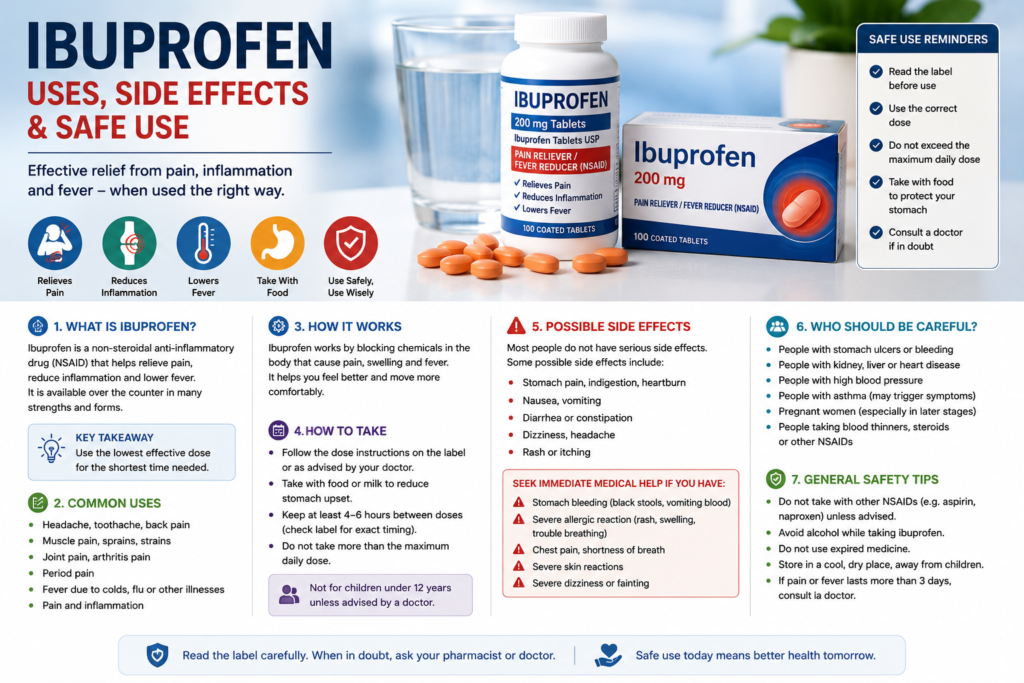
Ibuprofen is a commonly used medicine for pain, fever, and inflammation. Many people take it for headaches, toothache, back pain, muscle pain, period pain, joint pain, minor injuries, and symptoms linked with swelling or inflammation.
It belongs to a group of medicines called non-steroidal anti-inflammatory drugs, often shortened to NSAIDs. These medicines can reduce pain and inflammation, which makes ibuprofen different from some pain relievers that mainly help with pain and fever only.
Although ibuprofen is widely available, it should still be used carefully. It may not be suitable for everyone, especially people with stomach problems, kidney disease, heart disease, high blood pressure, asthma triggered by NSAIDs, or people taking certain regular medicines. Safe use starts with reading the label and knowing when to ask a doctor or pharmacist for advice.
What Is Ibuprofen?
Ibuprofen is a pain-relieving and anti-inflammatory medicine. It helps reduce pain, swelling, and high temperature. It is available in different forms, including tablets, capsules, liquid medicine, gels, creams, and sometimes stronger prescription forms.
Ibuprofen may be sold under different brand names, but the active ingredient remains ibuprofen. This means two products with different names may still contain the same medicine.
Common forms include:
- Tablets
- Capsules
- Soft gel capsules
- Liquid suspension
- Topical gel
- Topical cream
- Prescription-strength products
The right form depends on the type of pain, age of the person, medical history, and advice from a healthcare professional.
What Is Ibuprofen Used For?
Ibuprofen is often used for short-term relief of pain, fever, and inflammation. It may help with common conditions such as:
- Headache
- Toothache
- Back pain
- Muscle pain
- Period pain
- Joint pain
- Minor sprains
- Minor strains
- Cold or flu-related aches
- Fever
- Pain after minor injuries
- Inflammatory pain
Topical ibuprofen gel or cream may be used for local muscle or joint pain. Oral ibuprofen, such as tablets or capsules, works throughout the body.
However, ibuprofen does not cure the cause of pain. It helps manage symptoms. If pain is severe, unusual, or long-lasting, medical advice may be needed.
How Ibuprofen Works
Ibuprofen works by reducing substances in the body that are involved in pain, fever, and inflammation. These substances are part of the body’s natural response to injury or illness.
By lowering this response, ibuprofen can help reduce:
- Pain
- Swelling
- Tenderness
- Fever
- Inflammatory discomfort
This is why ibuprofen is commonly used for conditions where inflammation is part of the problem, such as sprains, muscle injuries, and some joint pain.
Ibuprofen vs Paracetamol
Ibuprofen and paracetamol are both used for pain and fever, but they are not the same medicine.
Paracetamol is commonly used for pain and fever. Ibuprofen can also reduce inflammation. This makes ibuprofen useful when swelling or inflammation is involved.
A simple difference is:
- Paracetamol: pain and fever relief
- Ibuprofen: pain, fever, and inflammation relief
The better choice depends on the person and the condition. Some people should avoid ibuprofen because of stomach, kidney, heart, blood pressure, asthma, or medicine interaction risks. When unsure, ask a pharmacist which option is safer.
General Dosage Guidance
The correct dose depends on the person’s age, weight, product strength, and health condition. Always follow the label or the instructions given by a doctor or pharmacist.
For many adult over-the-counter ibuprofen products, common directions involve taking a dose when needed and leaving the proper time between doses. However, the maximum daily amount depends on the product and country-specific label instructions.
Important dosing rules:
- Read the label before taking it.
- Use the lowest effective dose.
- Take it for the shortest time needed.
- Do not take more than the recommended amount.
- Do not take doses too close together.
- Do not combine multiple NSAIDs unless advised.
- Ask a pharmacist if you are unsure about the dose.
Taking more ibuprofen than recommended can increase the risk of side effects without giving better relief.
Should Ibuprofen Be Taken With Food?
Many people take ibuprofen with food or milk to reduce stomach irritation. This can be helpful for people who experience stomach discomfort after taking it.
A simple safe-use approach is:
- Take ibuprofen with water.
- Take it with or after food if it upsets your stomach.
- Avoid taking it on an empty stomach if you are prone to stomach irritation.
- Do not take it with alcohol if the label or doctor advises against it.
- Ask a pharmacist if you have a history of stomach ulcers or bleeding.
Food may reduce stomach discomfort, but it does not remove all risks. People with serious stomach history should ask a healthcare professional before using ibuprofen.
Who Should Be Careful With Ibuprofen?
Ibuprofen is not suitable for everyone. Some people should speak with a doctor or pharmacist before using it.
Extra care may be needed if you:
- Have had a stomach ulcer
- Have had stomach bleeding
- Have kidney disease
- Have liver disease
- Have heart disease
- Have high blood pressure
- Have asthma that worsens with NSAIDs
- Take blood-thinning medicines
- Take steroids
- Take other NSAIDs
- Are pregnant
- Are elderly
- Have inflammatory bowel disease
- Have severe dehydration
- Are taking regular prescription medicines
If you have any of these conditions, do not assume ibuprofen is safe just because it is available without a prescription.
Ibuprofen and Stomach Problems
One of the important risks of ibuprofen is stomach irritation or bleeding. This risk may increase if someone takes high doses, uses ibuprofen for a long time, drinks alcohol regularly, has a history of ulcers, or takes certain other medicines.
Warning signs of serious stomach problems may include:
- Severe stomach pain
- Vomiting blood
- Black or tar-like stools
- Feeling faint
- Unusual weakness
- Severe indigestion
- Blood in stool
These symptoms should be treated seriously. If they occur, urgent medical advice is needed.
Ibuprofen and Heart or Blood Pressure Concerns
NSAIDs, including ibuprofen, may not be suitable for some people with heart disease, high blood pressure, or risk factors for heart problems. In some cases, NSAIDs can affect blood pressure, fluid balance, or heart-related risk.
People should ask a doctor before using ibuprofen if they:
- Have heart disease
- Have had a stroke
- Have high blood pressure
- Have heart failure
- Take blood pressure medicines
- Need ibuprofen regularly
- Have been told to avoid NSAIDs
Short-term occasional use may be fine for many people, but personal risk matters. A pharmacist or doctor can help decide what is safest.
Ibuprofen and Kidney Health
Ibuprofen can affect kidney function in some people, especially when used for a long time, taken in high doses, or used while dehydrated.
Extra caution is important for people who:
- Have kidney disease
- Are elderly
- Are dehydrated
- Have vomiting or diarrhea
- Take water tablets
- Take certain blood pressure medicines
- Have heart failure
- Use NSAIDs regularly
If you are unwell with dehydration, vomiting, or diarrhea, ask a doctor or pharmacist before taking ibuprofen.
Ibuprofen and Asthma
Some people with asthma may be sensitive to NSAIDs like ibuprofen. For these people, ibuprofen may worsen breathing symptoms.
Do not take ibuprofen without medical advice if:
- You have had wheezing after ibuprofen
- Aspirin has triggered asthma symptoms
- Another NSAID has caused breathing problems
- You have been told to avoid NSAIDs
Warning signs may include wheezing, chest tightness, shortness of breath, or swelling. Seek medical help if breathing symptoms appear after taking ibuprofen.
Ibuprofen During Pregnancy
Ibuprofen may not be suitable during pregnancy, especially later in pregnancy. Pregnant patients should not take ibuprofen unless advised by a healthcare professional.
If you are pregnant, trying to become pregnant, or think you might be pregnant, ask a doctor or pharmacist before using ibuprofen. They may suggest a safer option depending on your symptoms and stage of pregnancy.
Ibuprofen While Breastfeeding
Some people may be able to use ibuprofen while breastfeeding, but it is still best to confirm with a healthcare professional, especially if the baby is premature, unwell, or very young.
A pharmacist or doctor can guide you based on your situation and the product being used.
Ibuprofen for Children
Children’s ibuprofen is available in specific forms and strengths. Children should not be given adult ibuprofen products unless a healthcare professional says it is safe.
Before giving ibuprofen to a child, check:
- Child’s age
- Child’s weight
- Product strength
- Correct dose
- Correct time gap
- Maximum doses in 24 hours
- Whether the child is dehydrated
- Whether the child has asthma or other health conditions
Use the measuring syringe or spoon provided with the medicine. Do not use a kitchen spoon.
Possible Side Effects
Like all medicines, ibuprofen can cause side effects. Not everyone gets them, and many people use ibuprofen without serious problems, but risks should be understood.
Possible side effects include:
- Indigestion
- Heartburn
- Stomach pain
- Nausea
- Vomiting
- Diarrhea
- Dizziness
- Headache
- Raised blood pressure
- Fluid retention
- Skin rash
Some side effects are mild, but others need medical attention.
Serious Side Effects to Watch For
Seek urgent medical help if you experience:
- Trouble breathing
- Swelling of the face, lips, tongue, or throat
- Severe rash or blistering
- Chest pain
- Weakness on one side of the body
- Sudden severe headache
- Vomiting blood
- Black stools
- Severe stomach pain
- Yellowing of skin or eyes
- Very reduced urination
- Severe dizziness or fainting
These symptoms may suggest a serious reaction and should not be ignored.
Ibuprofen and Other Medicines
Ibuprofen can interact with other medicines. This means it may increase side effects or change how another medicine works.
Ask a doctor or pharmacist before taking ibuprofen if you use:
- Blood thinners
- Aspirin
- Other NSAIDs
- Steroids
- Blood pressure medicines
- Water tablets
- Lithium
- Methotrexate
- Certain antidepressants
- Heart medicines
- Kidney-related medicines
- Diabetes medicines
- Herbal supplements that affect bleeding
Do not combine ibuprofen with naproxen, aspirin for pain relief, or other NSAIDs unless a healthcare professional tells you to.
Can Ibuprofen Be Used With Paracetamol?
In some situations, adults may be able to use ibuprofen and paracetamol separately because they are different medicines. However, this depends on the person’s health condition, current medicines, and the reason for pain or fever.
Do not create your own medicine routine without checking the label or asking a pharmacist. If symptoms are severe enough that you feel you need multiple medicines, it may be better to get medical advice.
Topical Ibuprofen Gel or Cream
Ibuprofen gel or cream is applied to the skin over the painful area. It may be used for local muscle or joint pain. Because less medicine enters the whole body compared with tablets, it may have fewer body-wide side effects for some people, but it still needs careful use.
When using topical ibuprofen:
- Apply only to the affected area.
- Do not apply to broken skin.
- Wash hands after use.
- Avoid contact with eyes and mouth.
- Do not cover tightly unless advised.
- Do not use with heat pads unless the label allows it.
- Follow the product instructions.
If skin irritation occurs, stop using it and ask a pharmacist or doctor.
Safe Storage
Store ibuprofen safely at home. Keep it:
- In the original packaging
- Away from heat and moisture
- Out of reach of children
- Away from pets
- With the label and leaflet
- Away from expired medicines
Do not keep loose tablets in bags or unmarked containers. This can lead to confusion and accidental misuse.
When to See a Doctor
Ibuprofen may help short-term symptoms, but it should not be used to hide serious problems.
Speak with a doctor if:
- Pain is severe
- Pain lasts more than a few days
- Fever does not improve
- Symptoms are getting worse
- You need ibuprofen often
- You have repeated joint swelling
- You have unexplained pain
- You have side effects
- You have stomach bleeding symptoms
- You have chest pain or breathing difficulty
Long-lasting pain needs proper diagnosis, not only repeated pain relief.
Quick Ibuprofen Safety Checklist
Before taking ibuprofen, ask yourself:
- Have I read the label?
- Am I taking the correct dose?
- Am I already taking another NSAID?
- Do I have stomach, kidney, heart, or blood pressure problems?
- Do I have asthma triggered by NSAIDs?
- Am I pregnant or breastfeeding?
- Am I taking blood thinners or steroids?
- Is this medicine suitable for my age?
- Am I using it only for a short time?
- Do I need a pharmacist’s advice?
If you are unsure about any answer, ask before taking it.
Final Thoughts
Ibuprofen can be a helpful medicine for pain, fever, and inflammation. It may be useful for headaches, muscle pain, period pain, minor injuries, and other short-term symptoms. However, it is not the right choice for everyone.
The safest way to use ibuprofen is to take the lowest effective dose for the shortest necessary time, follow the label carefully, and avoid combining it with other NSAIDs unless advised. People with stomach ulcers, kidney disease, heart disease, high blood pressure, asthma sensitivity, pregnancy, or regular prescription medicines should ask a healthcare professional first.
Used correctly, ibuprofen can provide effective relief. Used carelessly, it may cause avoidable harm. Always read the label and ask your pharmacist or doctor when in doubt.
Medical Disclaimer:
This article is for general information only and should not replace professional medical advice. Always follow the medicine label and speak with a qualified healthcare professional before starting, stopping, combining, or changing any medicine.