Introduction
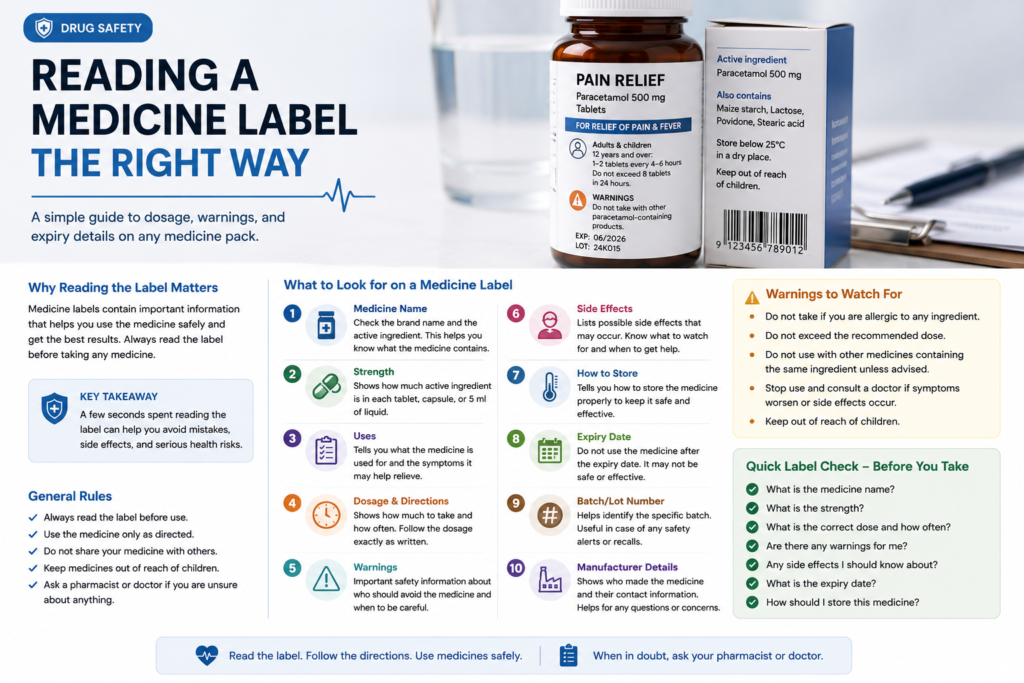
A medicine label may look small, but it carries very important information. It tells you what the medicine is, what it is used for, how much to take, when to take it, who should avoid it, and what warnings you should know before using it.
Many medicine mistakes happen because people do not read the label carefully. Some take the wrong dose. Some take two medicines with the same active ingredient. Some use expired medicine. Others miss important warnings about allergies, pregnancy, alcohol, driving, or interactions with other medicines.
Learning how to read a medicine label the right way can help you use medicines more safely and get the best results from your treatment.
Why Medicine Labels Matter
Medicine labels are designed to guide safe use. They are not just extra information printed on the box. They help you understand whether the medicine is right for your symptoms, how to take it properly, and when you should ask a doctor or pharmacist for advice.
A medicine label can help you:
- Identify the medicine correctly
- Understand the active ingredient
- Know what symptoms the medicine treats
- Follow the correct dose
- Avoid taking too much
- Check important warnings
- Notice possible side effects
- Avoid unsafe combinations
- Store the medicine properly
- Check the expiry date before use
A few minutes spent reading the label can prevent serious mistakes.
Start With the Medicine Name
The first thing to check is the medicine name. Many medicines have a brand name and a generic name. The brand name is the name given by the company, while the generic name is usually the name of the active ingredient.
For example, two products may have different brand names but contain the same active ingredient. This matters because taking both products together can accidentally double the dose.
When reading the medicine name, check:
- Brand name
- Generic name
- Active ingredient
- Medicine strength
- Dosage form, such as tablet, capsule, syrup, cream, or drops
Do not rely only on the front design of the box. Always check the actual ingredients and strength.
Check the Active Ingredient
The active ingredient is the part of the medicine that produces the main effect. It is the ingredient that treats pain, fever, allergy, cough, infection, or another condition.
This is one of the most important parts of the label because different medicines can contain the same active ingredient. This is common in cold, flu, pain relief, and allergy medicines.
For example, a person may take a pain reliever and then take a cold medicine without realizing both contain the same active ingredient. This can lead to taking too much.
Before taking any medicine, ask:
- What is the active ingredient?
- Am I already taking this ingredient in another medicine?
- Is this ingredient safe for my age and health condition?
- Is this ingredient suitable with my other medicines?
- Do I know the maximum daily amount?
If you are unsure, ask a pharmacist before taking it.
Understand the Medicine Strength
Medicine strength tells you how much active ingredient is in each tablet, capsule, spoonful, spray, drop, or measured amount.
Strength may be written as:
- mg, meaning milligrams
- mcg, meaning micrograms
- g, meaning grams
- mg/5 mL for liquid medicines
- %, often used for creams or drops
For example, one product may say 250 mg, while another may say 500 mg. Taking two tablets from each product would not give the same total amount.
Always check the strength before deciding how much to take. This is especially important for children’s liquid medicines, because different products may have different strengths.
Read the Uses Section
The uses section explains what the medicine is intended to treat. It may say the medicine helps with fever, pain, cough, allergy symptoms, heartburn, diarrhea, or other conditions.
This section helps you decide whether the medicine matches your symptoms. Taking medicine for the wrong reason may not help and may expose you to unnecessary side effects.
When checking the uses section, ask:
- Does this medicine treat my symptom?
- Is my symptom listed on the label?
- Is this medicine meant for short-term use?
- Do I need medical advice instead of self-treatment?
If your symptom is severe, unusual, long-lasting, or getting worse, it is safer to speak with a healthcare professional.
Read the Warnings Carefully
The warnings section is one of the most important parts of the label. It tells you when not to use the medicine, when to ask a doctor first, possible side effects, and when to stop using the medicine.
Warnings may include information about:
- Allergies
- Pregnancy
- Breastfeeding
- Liver disease
- Kidney disease
- Heart disease
- High blood pressure
- Diabetes
- Stomach ulcers
- Asthma
- Alcohol use
- Driving or operating machinery
- Drug interactions
- Age restrictions
Do not skip this section. A medicine that is safe for one person may not be safe for another person.
Follow the Directions Exactly
The directions section tells you how much medicine to take, how often to take it, and how long to use it. This section may also explain whether the medicine should be taken with food, water, or at a specific time.
Directions may include:
- Number of tablets or capsules
- Amount of liquid medicine
- Time gap between doses
- Maximum number of doses per day
- How many days to use the medicine
- Whether to shake the bottle
- Whether to use a measuring spoon or syringe
- Whether the medicine is for adults or children
Never guess the dose. Never take more because symptoms feel strong. More medicine does not always mean faster relief, and it can increase the risk of harm.
Be Careful With Children’s Doses
Children’s medicine needs extra care. A child’s dose may depend on age, weight, and product strength. Adult medicine should not be given to children unless a healthcare professional says it is safe.
When giving medicine to a child, check:
- Child’s age
- Child’s weight, if required
- Correct product strength
- Correct amount per dose
- Correct time gap
- Maximum doses in 24 hours
- Whether the product is suitable for children
Use the measuring device that comes with the medicine. Do not use a kitchen spoon because it may give the wrong amount.
Check the Inactive Ingredients
Inactive ingredients do not provide the main treatment effect, but they can still matter. They may include coloring, flavoring, preservatives, fillers, sweeteners, or other substances.
This section is important for people with allergies, sensitivities, dietary restrictions, or certain medical conditions.
Check inactive ingredients if you are sensitive to:
- Lactose
- Gluten
- Sugar
- Artificial colors
- Preservatives
- Gelatin
- Alcohol in liquid medicine
- Certain flavorings
If you have a known allergy or restriction, ask a pharmacist to help you choose a suitable product.
Look for Side Effects
Some labels mention possible side effects or warning signs. Not everyone will experience side effects, but it is important to know what may happen.
Possible side effects may include:
- Drowsiness
- Dizziness
- Nausea
- Stomach upset
- Dry mouth
- Rash
- Headache
- Constipation
- Diarrhea
- Allergic reaction
Some symptoms need urgent attention, such as trouble breathing, swelling of the face or throat, severe rash, fainting, severe bleeding, or confusion.
If you notice serious or unexpected symptoms after taking a medicine, seek medical advice quickly.
Check for Drug Interactions
Many labels warn about interactions with other medicines, alcohol, or supplements. This is especially important if you already take regular medication.
Before taking a new medicine, check whether it may interact with:
- Prescription medicines
- Over-the-counter medicines
- Vitamins
- Herbal products
- Supplements
- Alcohol
- Certain foods or drinks
If you take blood thinners, heart medicines, diabetes medicines, blood pressure medicines, sleeping pills, antidepressants, or seizure medicines, ask a pharmacist before adding anything new.
Check the Expiry Date
The expiry date tells you how long the medicine is expected to remain safe and effective when stored properly. Do not use medicine after the expiry date.
Expired medicine may:
- Become less effective
- Change in quality
- Become unsafe in some cases
- Fail to treat the condition properly
Check the expiry date before every use, especially if the medicine has been sitting in a drawer or cabinet for a long time.
If the medicine is expired, damaged, discolored, smells unusual, or looks different from normal, do not use it. Ask a pharmacist how to dispose of it safely.
Read the Storage Instructions
Storage instructions explain how to keep the medicine safe and effective. Some medicines can be stored at room temperature, while others may need refrigeration or protection from light, heat, or moisture.
Common storage instructions include:
- Store below a specific temperature
- Keep in a cool, dry place
- Protect from sunlight
- Do not freeze
- Refrigerate after opening
- Keep the lid tightly closed
- Keep out of reach of children
Do not store medicines in places that become hot or humid, such as bathrooms, cars, or near kitchen stoves. Poor storage can reduce medicine quality.
Check the Batch or Lot Number
The batch or lot number identifies the specific group of products made at the same time. This number is important if there is a recall, safety alert, or quality issue.
You may not need this number every day, but it can be useful if:
- A product is recalled
- A pharmacist asks for product details
- You report a side effect
- You contact the manufacturer
- There is a concern about packaging or quality
Keep the medicine in its original package so this information remains available.
Look for Manufacturer Details
Medicine packaging usually includes manufacturer or distributor details. This information can help if you need to report a concern, ask a question, or verify the product.
Manufacturer details may include:
- Company name
- Address
- Customer service number
- Product license information
- Barcode or registration details
Avoid using medicines from damaged, unmarked, or suspicious packaging. If a medicine package looks fake, opened, or altered, do not use it.
Prescription Label vs Over-the-Counter Label
Prescription medicine labels and over-the-counter labels may look different, but both are important.
A prescription label may include:
- Patient name
- Doctor’s name
- Pharmacy name
- Medicine name
- Strength
- Dose instructions
- Quantity supplied
- Refill information
- Date dispensed
- Special warnings
Over-the-counter medicine labels usually include:
- Active ingredient
- Uses
- Warnings
- Directions
- Inactive ingredients
- Expiry date
- Manufacturer details
For prescription medicines, follow the pharmacy label and any doctor instructions. If instructions seem unclear or different from what you expected, contact the pharmacy before taking the medicine.
Common Label Mistakes People Make
Many medicine mistakes happen because people rush or assume they already know how to take the medicine.
Common mistakes include:
- Taking medicine without reading the label
- Taking two products with the same active ingredient
- Using adult medicine for children
- Using a kitchen spoon for liquid medicine
- Ignoring warning labels
- Taking extra doses
- Taking doses too close together
- Using expired medicine
- Storing medicine incorrectly
- Mixing medicine with alcohol without checking
- Sharing medicine with someone else
Most of these mistakes are preventable.
Quick Label Checklist Before Taking Medicine
Before you take any medicine, ask yourself:
- What is the medicine name?
- What is the active ingredient?
- What is the strength?
- What symptoms is it for?
- What dose should I take?
- How often should I take it?
- What is the maximum dose?
- Are there any warnings for me?
- Can I take it with my other medicines?
- Can I take it with food or alcohol?
- What side effects should I watch for?
- Is it expired?
- How should it be stored?
If you cannot answer these questions, ask a pharmacist or doctor.
When to Ask a Doctor or Pharmacist
You should ask for advice before taking medicine if:
- You are pregnant or breastfeeding
- You are giving medicine to a child
- You are elderly or frail
- You have liver or kidney disease
- You have heart disease or high blood pressure
- You take regular prescription medicines
- You have allergies
- You are already taking similar medicine
- Symptoms are severe or unusual
- Symptoms are not improving
- You are unsure about the dose
Asking for help is not a weakness. It is part of safe medicine use.
Final Thoughts
Reading a medicine label is one of the simplest ways to protect your health. The label tells you what the medicine contains, what it treats, how to take it, who should avoid it, and how to store it safely.
Before using any medicine, take a moment to check the active ingredient, strength, directions, warnings, expiry date, and storage instructions. Be extra careful with children’s medicines, combination products, and medicines taken with other treatments.
A medicine label is your first safety guide. Read it carefully, follow it correctly, and ask a pharmacist or doctor whenever something is unclear.
Medical Disclaimer:
This article is for general information only and should not replace professional medical advice. Always read the medicine label and speak with a qualified healthcare professional before starting, stopping, or changing any medicine.